MAYA CULTURE
Author: Adi E. Lazos Ruíz

MAYA LANGUAGE
Authors: Ismael May May and Adi E. Lazos Ruíz

CLIMATE
Author: David Romero

CENOTES
Authors: Iris Neri Flores and Elia Escobar Sánchez

VEGETATION
Authors: Luis Higinio Salinas Peba, Andrea Mariel Rodríguez Martínez, Ana Cecilia Valdés Lara

COASTAL WETLANDS
Authors: Karla Rodríguez Medina and Édgar Abel Sánchez García

BEACHES AND COASTAL DUNES Author: Gabriela Mendoza González

ARTHROPODS
Author: Miguel Ángel Pinkus Rendón

REPTILES
Authors: Carlos Yáñez Arenas and Luis Aguilar López

BIRDS
Author: Adriana Vallarino Moncada

MAMMALS
Author: Luis Higinio Salinas Peba and Adriana Vallarino Moncada

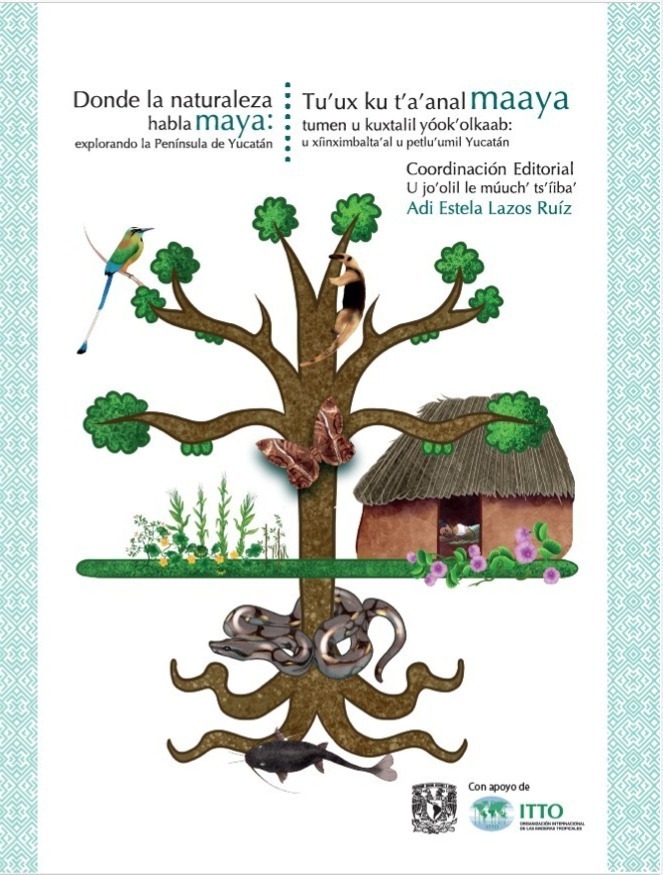
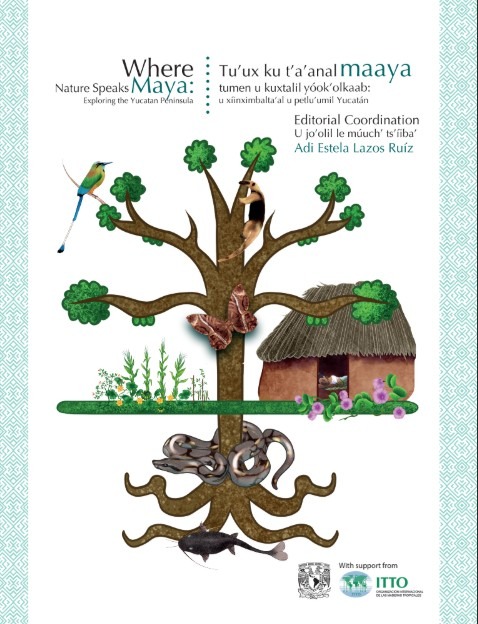
These animations are excerpts from each chapter of the book
"Where Nature Speaks Maya: Exploring the Yucatan Peninsula".
Translated into English by Carlos E. Erbach.
Narrated by Jeny Itzel Oloarte Torres.

MAAYA MIATSIL
Autoría: Adi E. Lazos Ruíz
Su'ut ich maaya tumen: Samuel Canul Yah

MAAYA T'AAN
Autoría: Ismael May May yéetel Adi E. Lazos Ruíz
Su'ut ich maaya tumen: Ismael May May

CLIMA
Autoría: David Romero
Su'ut ich maaya tumen: Maria Lilia Hau Ucan

TS'ONO'OTO'OB
Autoría: Iris Neri Flores yéetel Elia Escobar Sánchez
Su'ut ich maaya tumen: Maria Lilia Hau Ucan

U K'ÁAXILIL
Autoría: Luis Higinio Salinas Peba, Andrea Mariel Rodríguez Martínez yéetel Ana Cecilia Valdés Lara
Su'ut ich maaya tumen: Samuel Canul Yah

HUMEDALES NAATS' TI' K'ÁA'NÁAB
Autoría: Karla Rodríguez Medina yéetel Édgar Abel Sánchez García
Su'ut ich maaya tumen: Marleny Ake Pech

JÁAL JA' YÉETEL DUNAS
Autoría: Gabriela Mendoza González
Su'ut ich maaya tumen: Marleny Ake Pech

ARTRÓPODOS
Autoría: Miguel Ángel Pinkus Rendón Su'ut ich maaya tumen: Sary Lorena Hau Ucan

REPTILES
Autoría: Carlos Yáñez Arenas yéetel Luis Aguilar López
Su'ut ich maaya tumen: Sary Lorena Hau Ucan

CH'ÍICH'O'OB
Autoría: Adriana Vallarino Moncada Su'ut ich maaya tumen: Ismael May May

MAMÍFEROS
Autoría: Luis Higinio Salinas Peba yéetel Adriana Vallarino Moncada
Su'ut ich maaya tumen: Samuel Canul Yah

Capítulos tu ts'íibil "Tu'ux ku t'a'anal maaya tumen u kuxtalil yóok'olkaab: u xíinximbalta'al u petlu'umil Yucatán"
Tso'ol tumen: Ismael May May

Punta Laguna

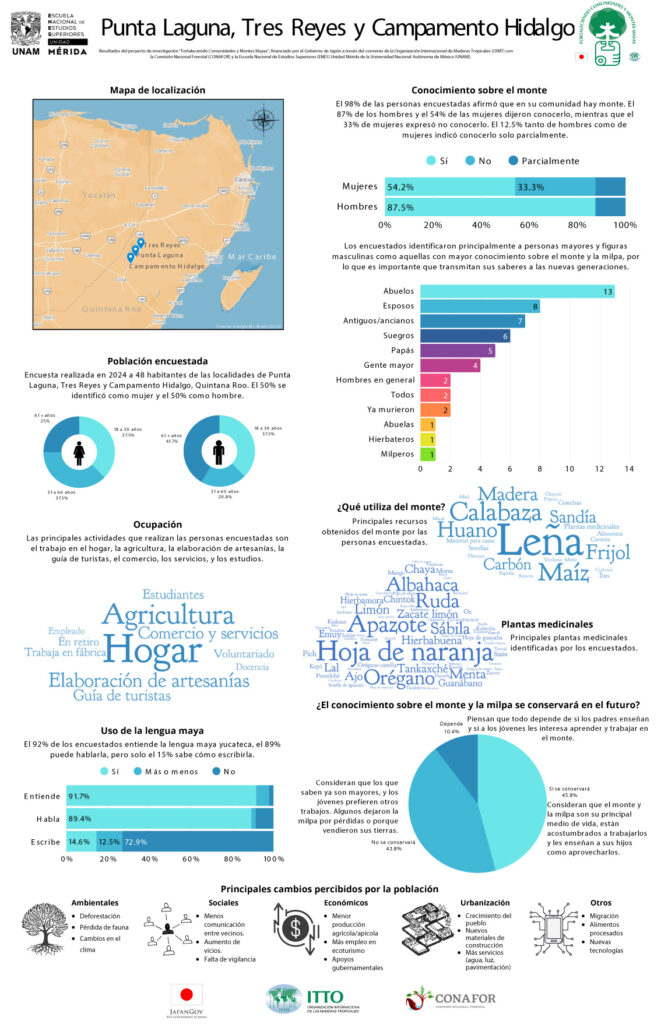
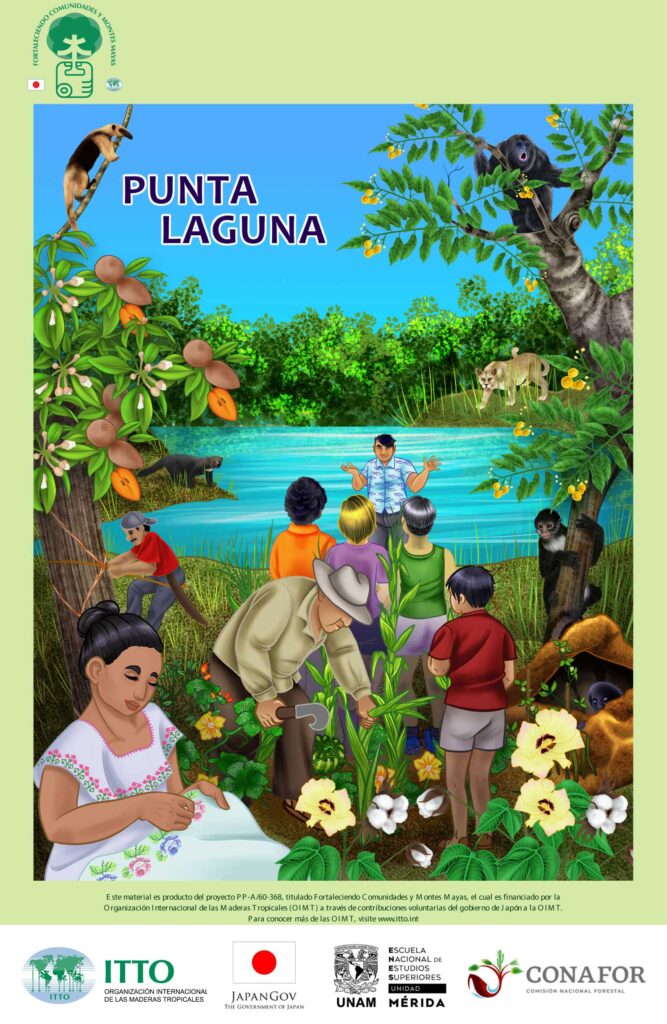
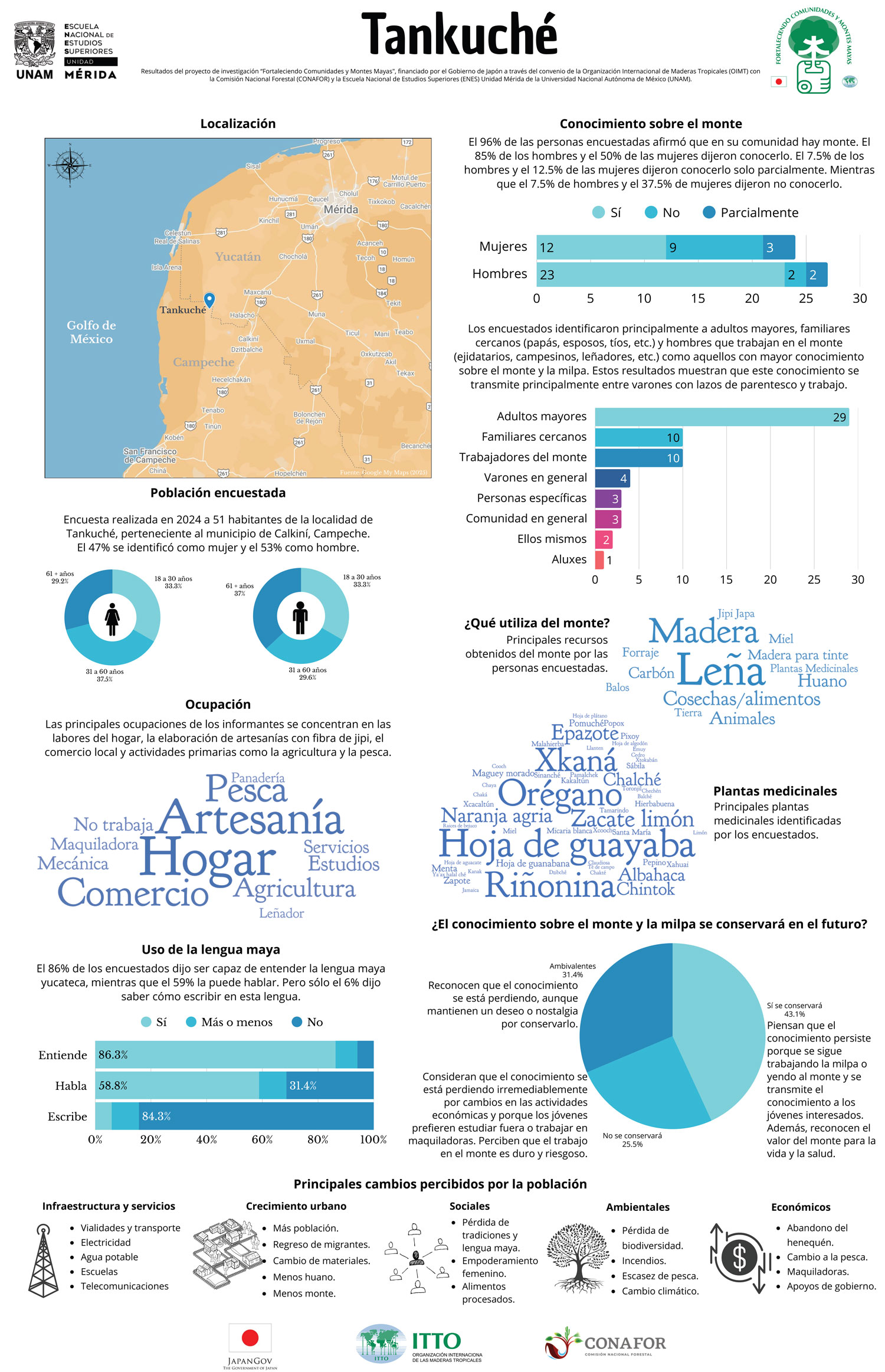
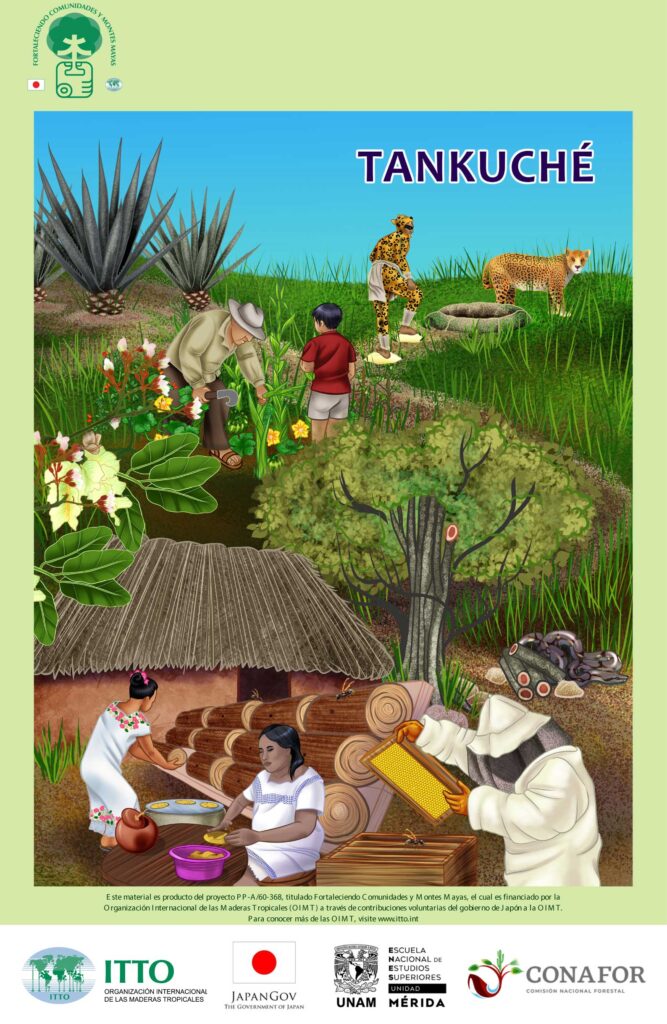
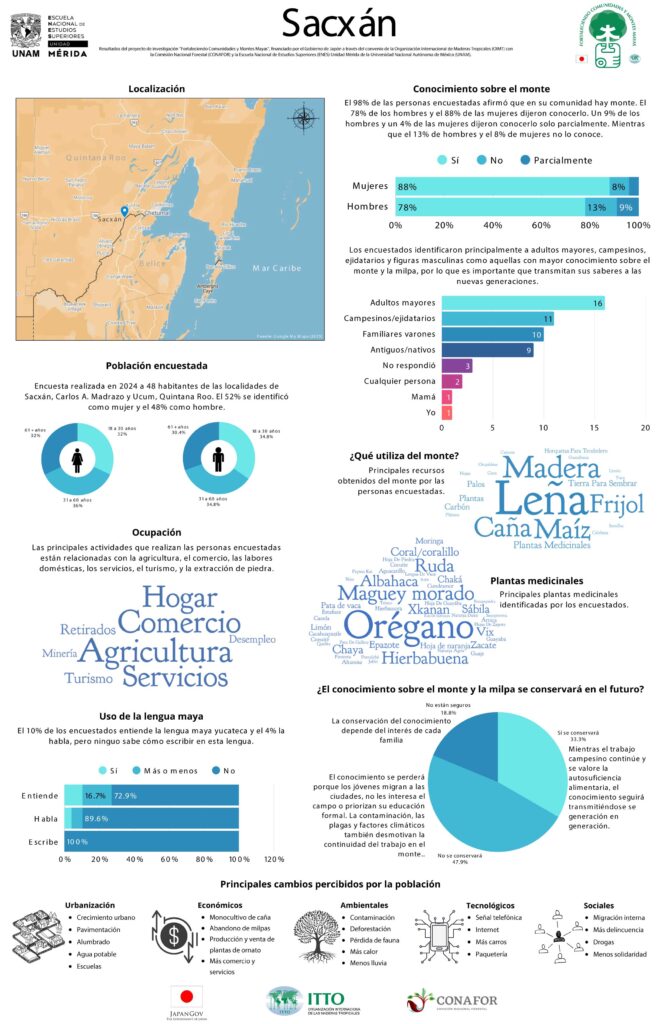
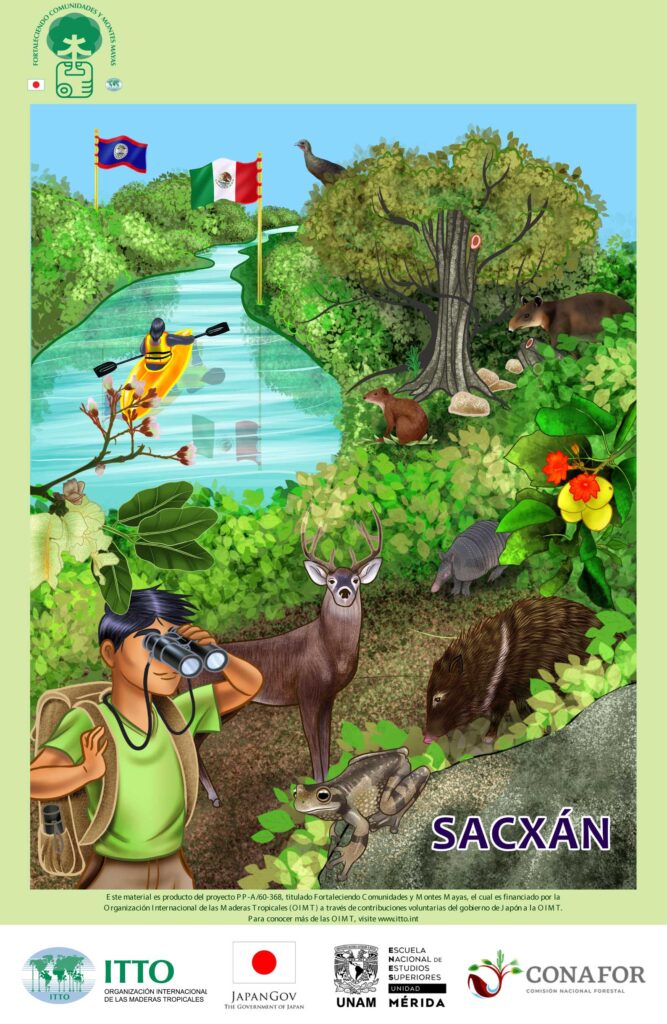
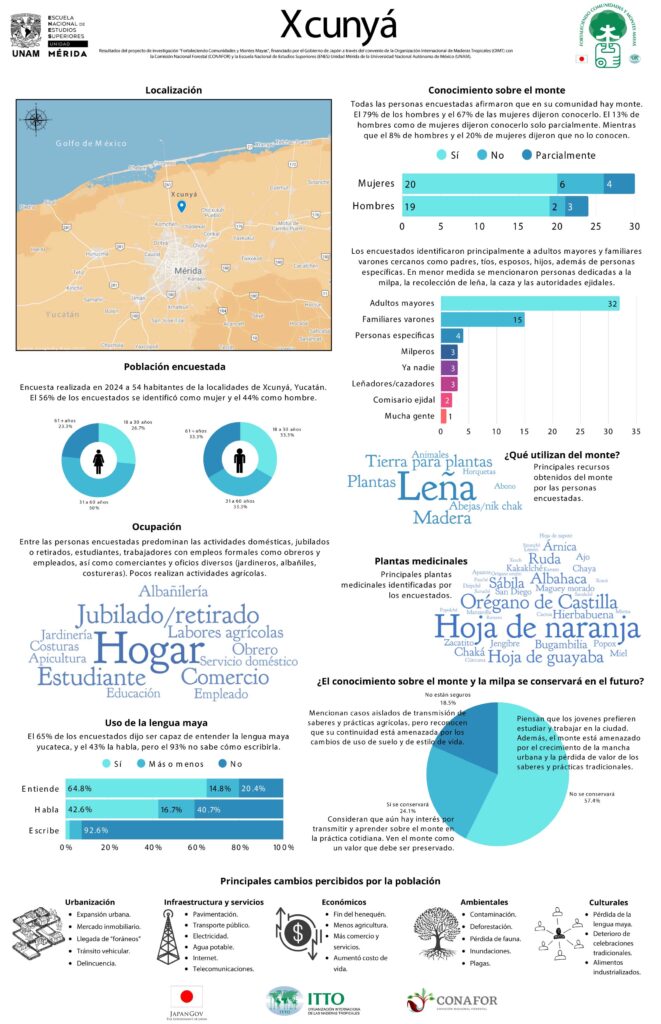
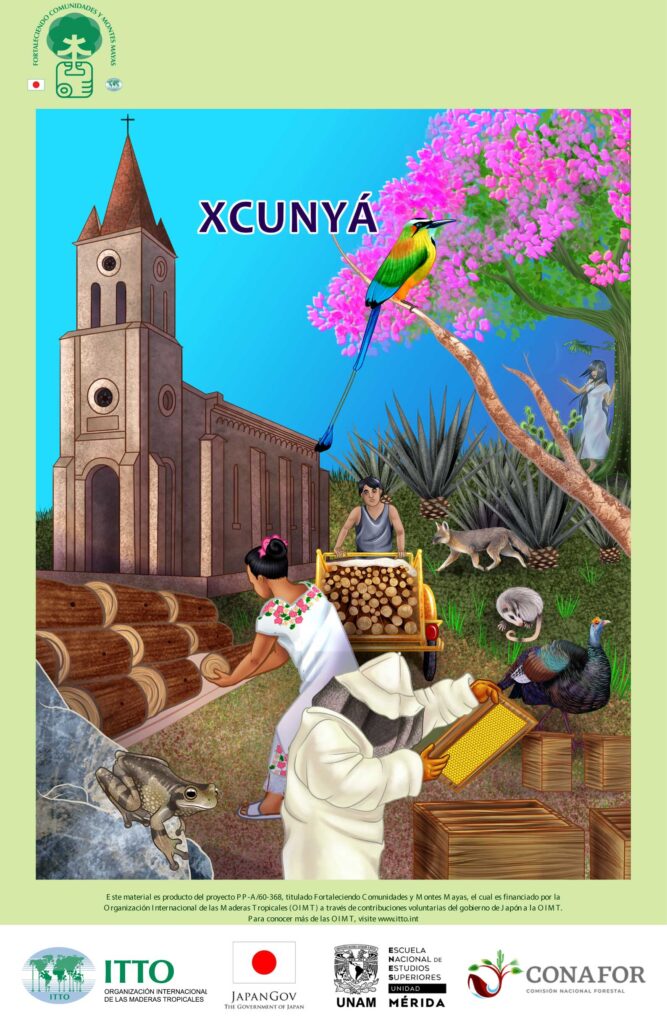
Approximately 50 interviews were conducted, with questions related to knowledge about the mountain and changes over time at this study site. We present the main results graphically and an illustration containing elements mentioned by the people in this research.

Approximately 50 interviews were conducted, with questions related to knowledge about the mountain and changes over time at this study site. We present the main results graphically and an illustration containing elements mentioned by the people in this research.

Approximately 50 interviews were conducted, with questions related to knowledge about the mountain and changes over time at this study site. We present the main results graphically and an illustration containing elements mentioned by the people in this research.

Approximately 50 interviews were conducted, with questions related to knowledge about the mountain and changes over time at this study site. We present the main results graphically and an illustration containing elements mentioned by the people in this research.

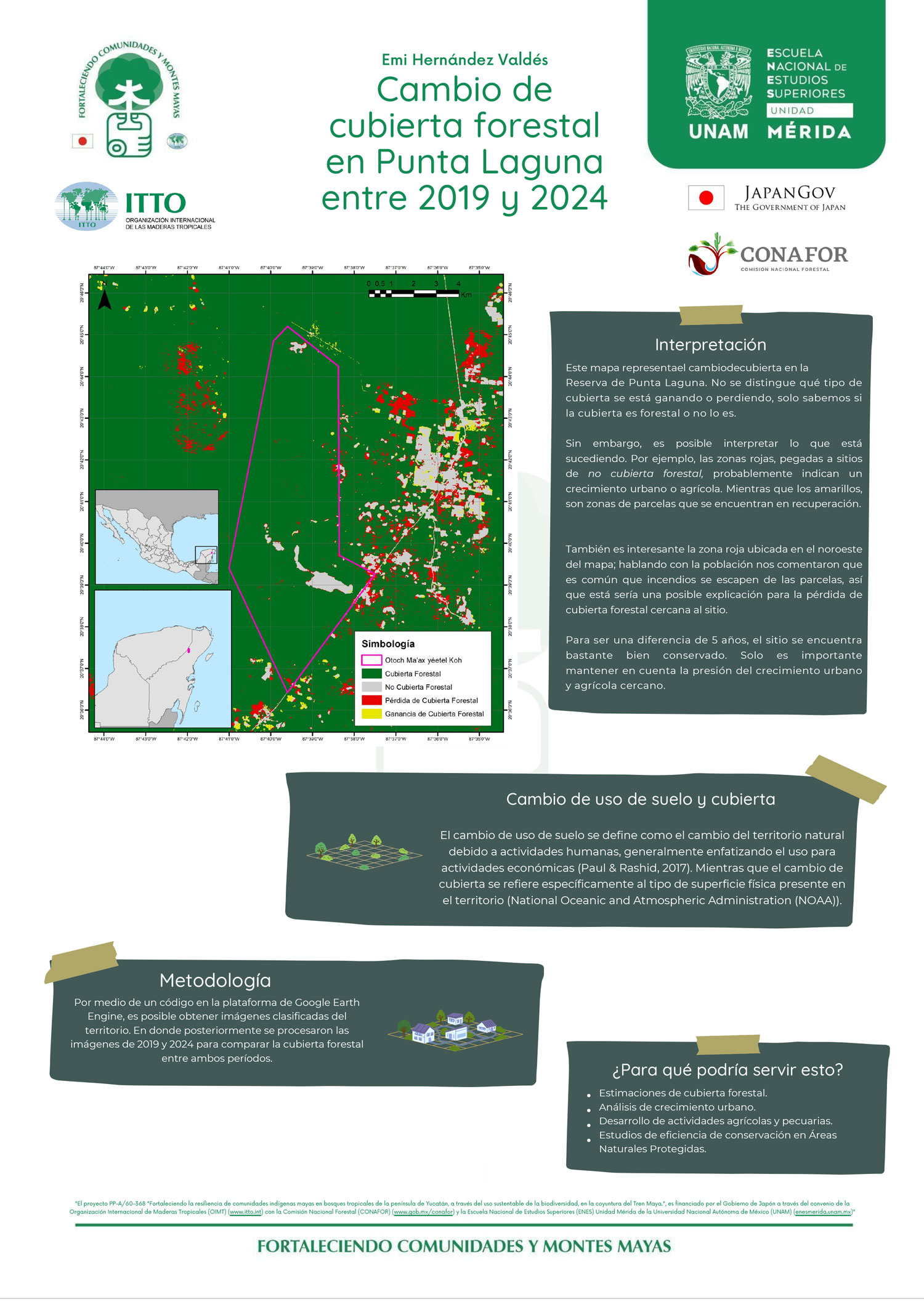
Change in forest cover in Punta Laguna.


Prepared by Emi Hernández.

A standardized methodology based on remote sensing and spatial analysis in Google Earth Engine is proposed and applied to detect and quantify changes in land use and land cover. This method integrates the processing of multi-temporal satellite images with supervised classification techniques, enabling reproducible, large-scale monitoring of landscape transformations over a 20-year period. The utility and effectiveness of this approach are demonstrated through a study of the Otoch Ma'ax yéetel Koh Flora and Fauna Reserve in Punta Laguna. Its primary role here is to serve as a test area to validate the methodology. The central objective is, therefore, to evaluate the robustness of this framework as a generalizable tool for the objective and systematic assessment of land dynamics.

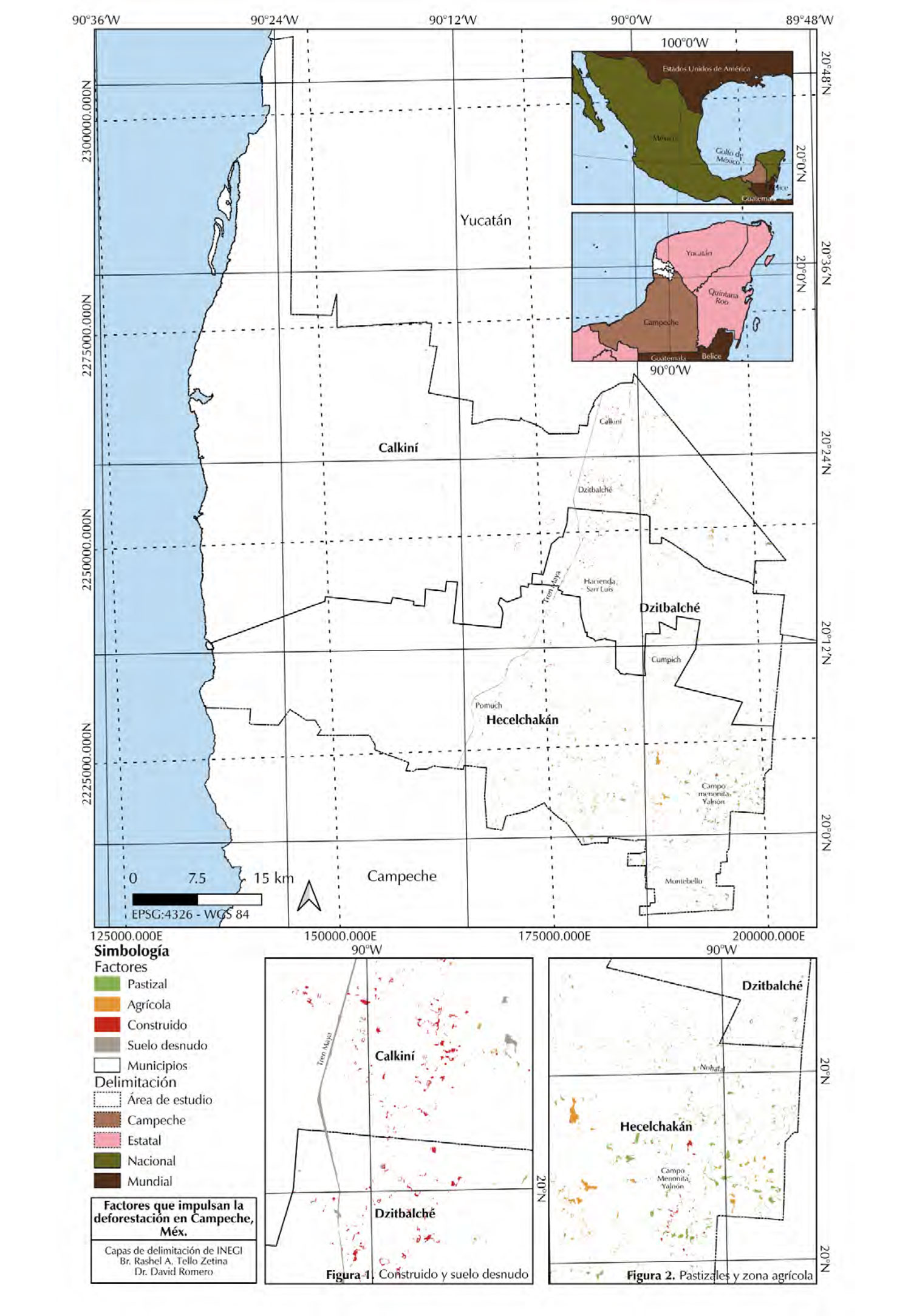
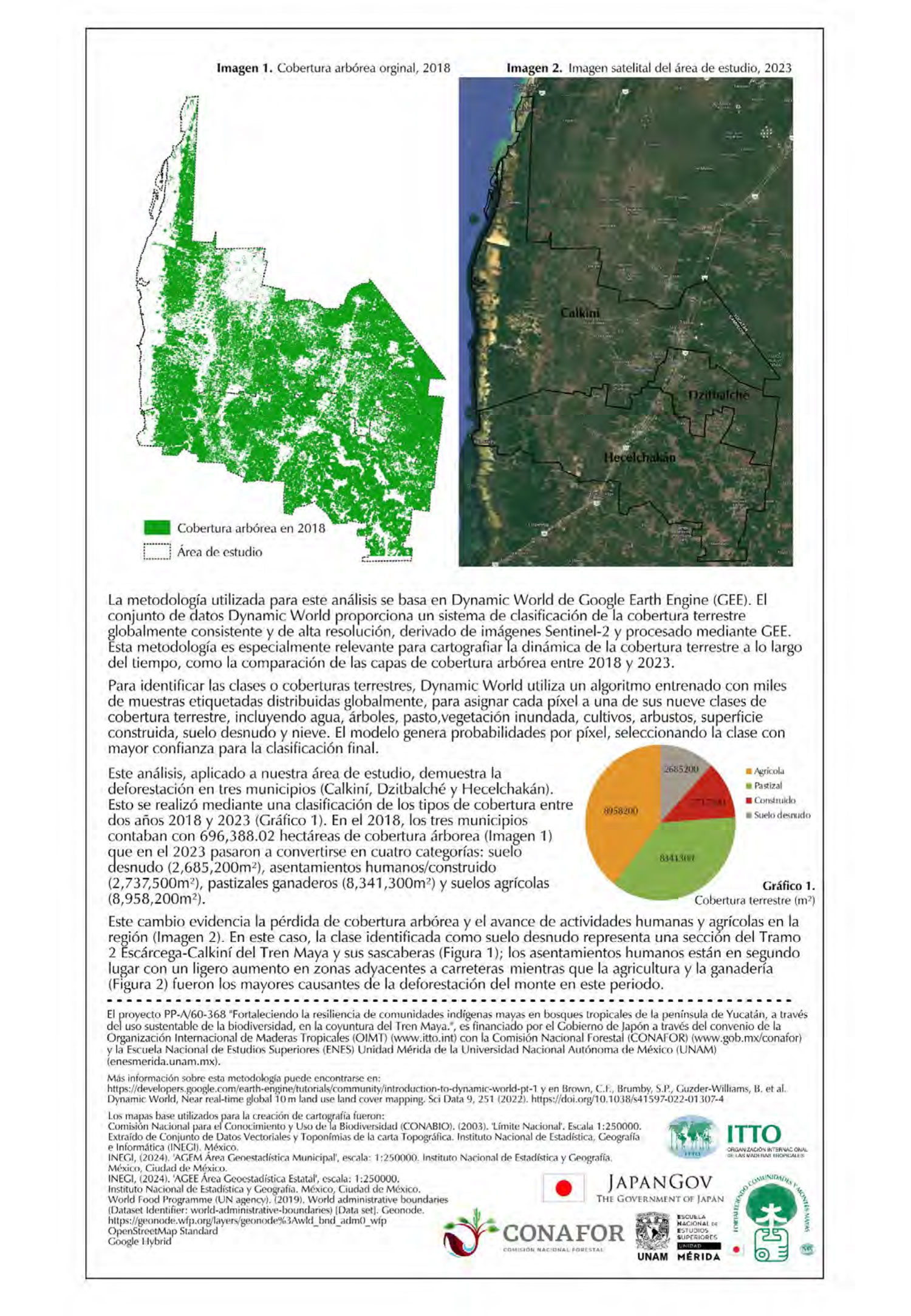
Factors driving deforestation in Campeche, Mexico.

Prepared by Rashel Tello.
The map presents an analysis focused on the municipalities of Calkiní, Dzitbalché and Hecelchakán, which shows a significant process of deforestation in the period between 2018 and 2023.

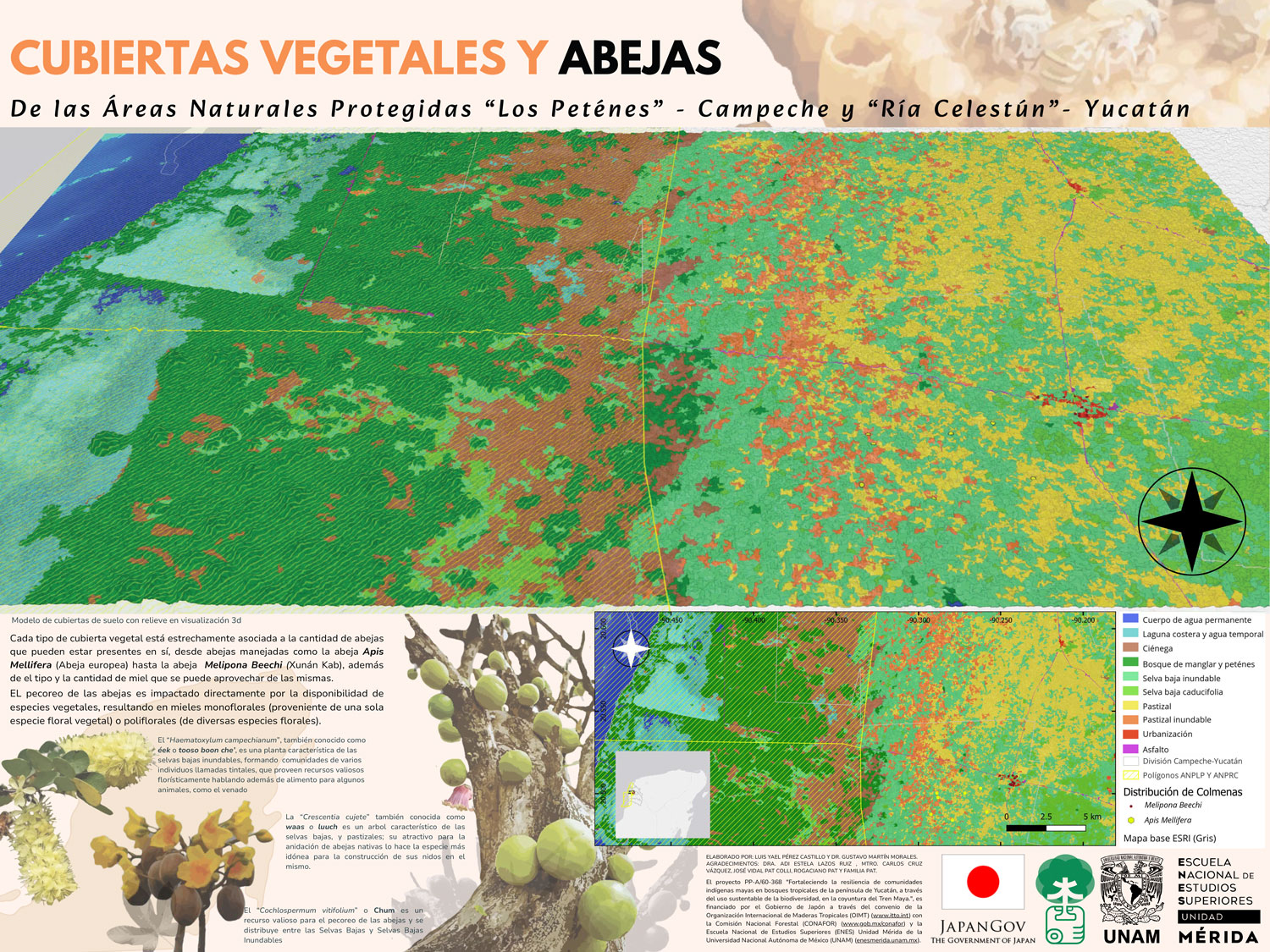
Plant covers and bees.

Prepared by Luis Yael Pérez Castillo. This map shows the vegetation types of the Los Petenes Protected Natural Area in Campeche, where the Tankuché site is located. It mentions three plant species important for honey production.

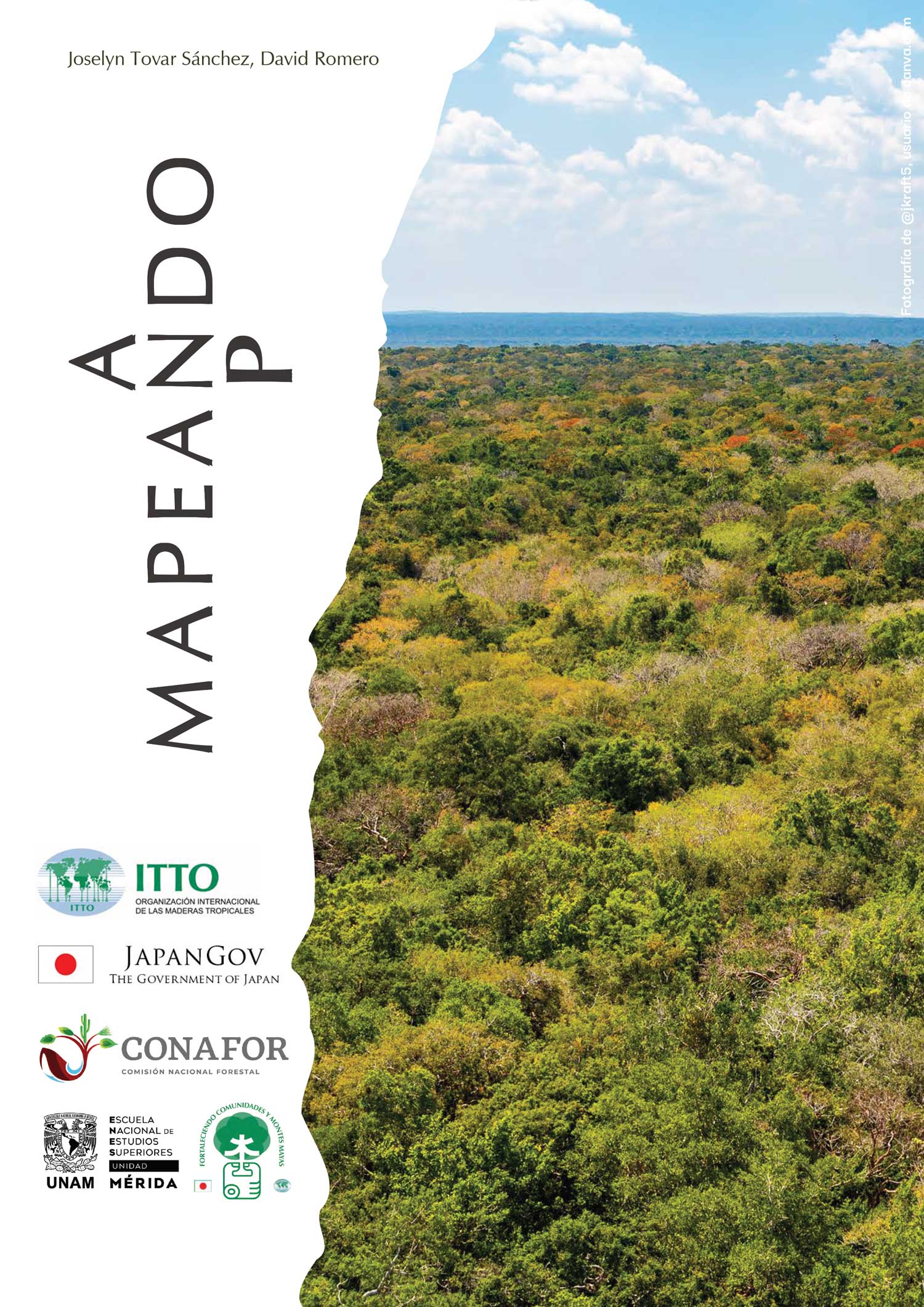
Mapeando ANP

Elaborado por Joselyn Tovar Sánchez y David Romero. Este trabajo en formato de revista muestra mapas e información de Áreas Naturales Protegidas de la península de Yucatán.

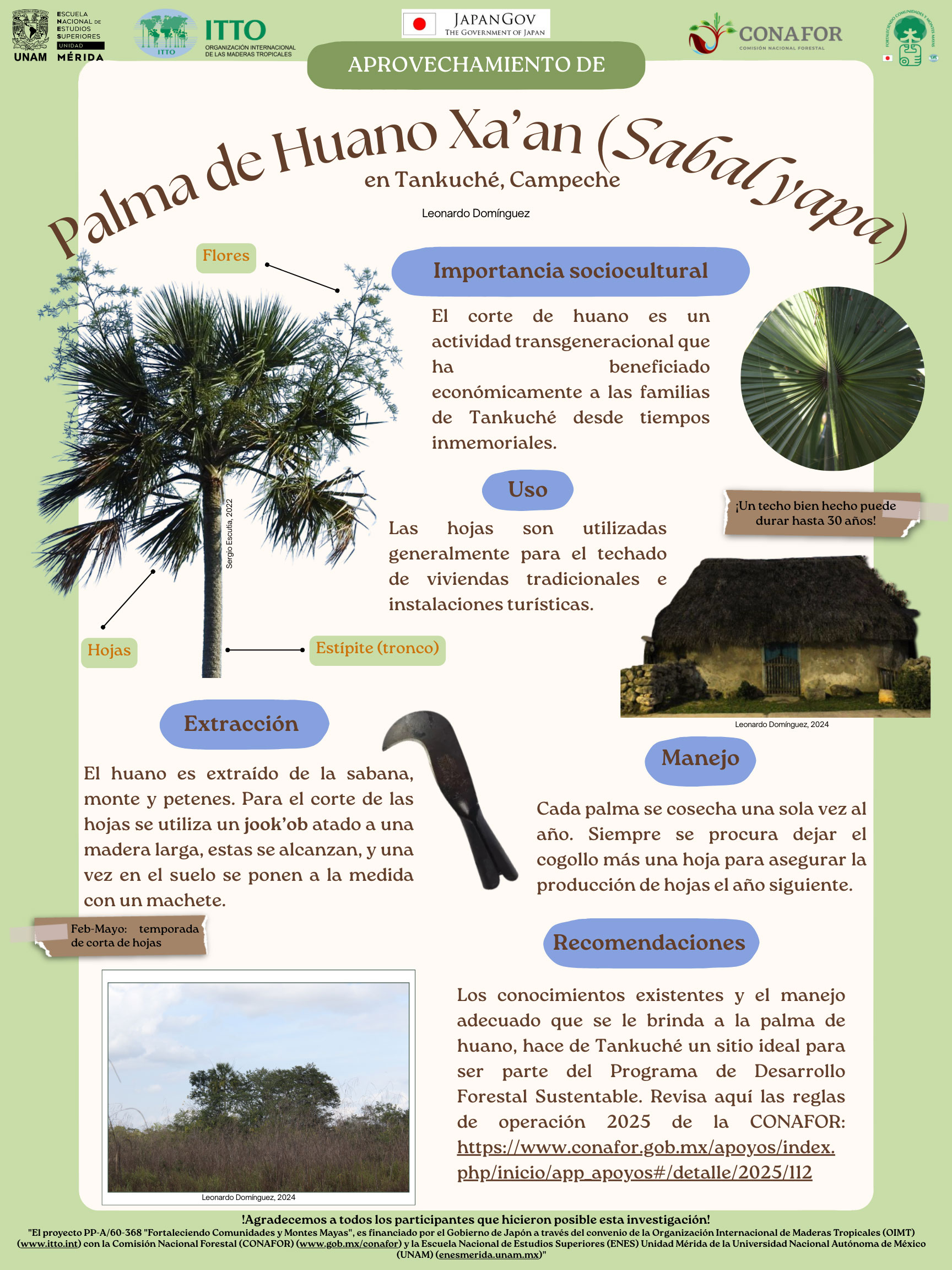
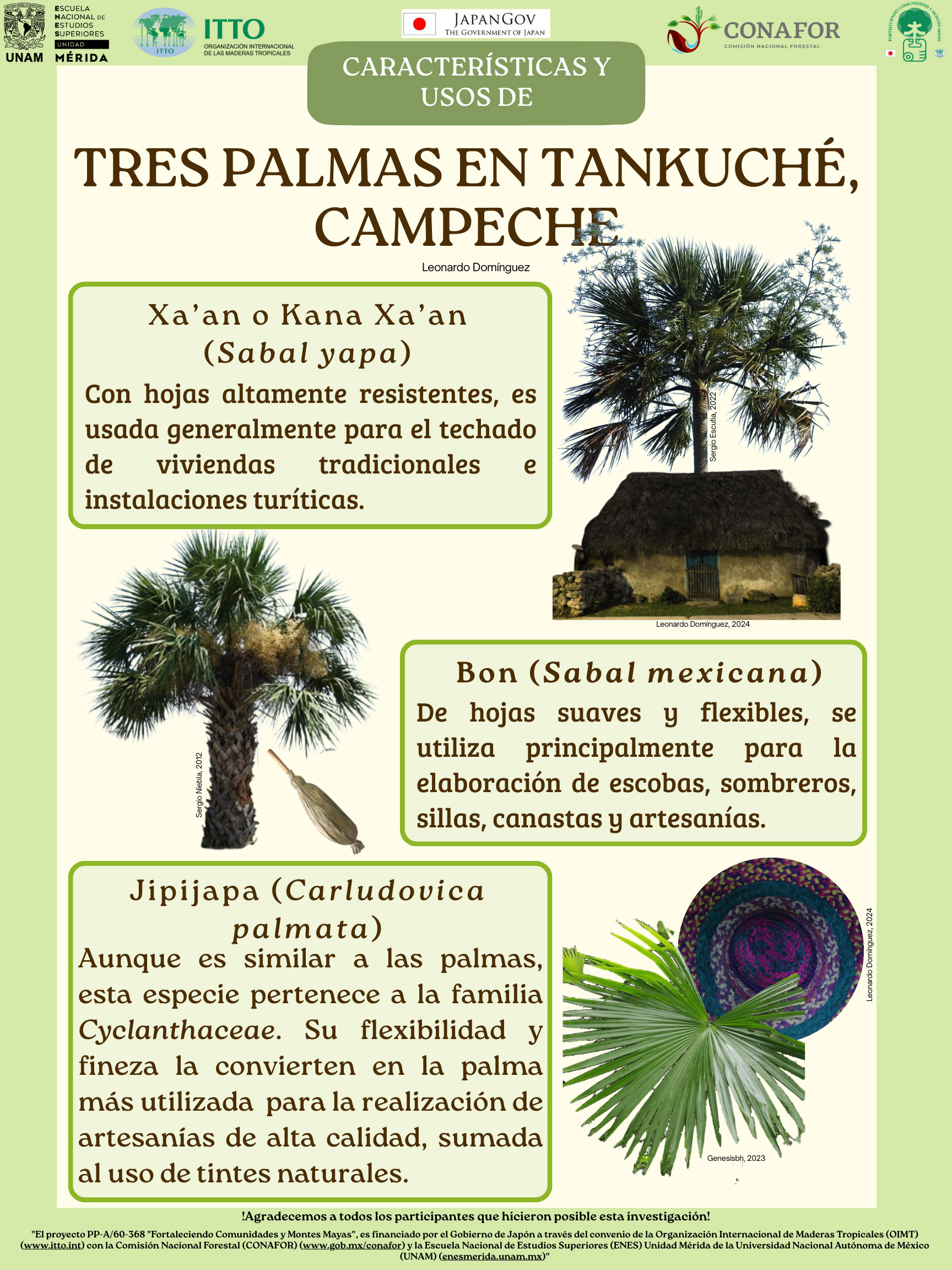
Information on the uses and cultural importance of palm trees in Tankuché, Campeche. This data is the result of interviews conducted at the study site. Infographics created by Leonardo Domínguez Jaime.

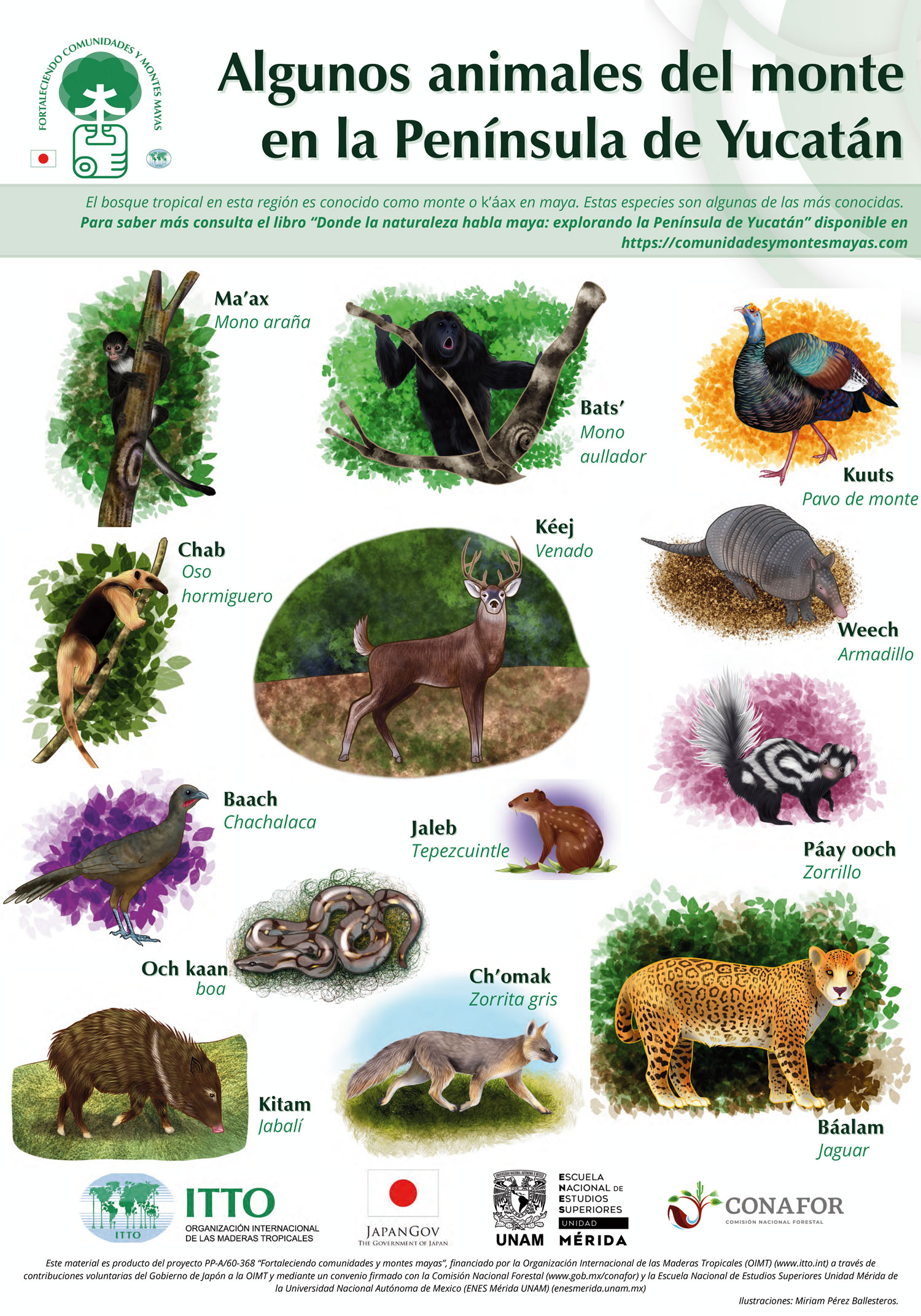
Some of the animals found in the mountains of the Yucatán Peninsula were mentioned by the people interviewed for this research. Infographic created by Bárbara Cortés and Adi Lazos. Illustrations by Miriam Pérez Ballesteros.

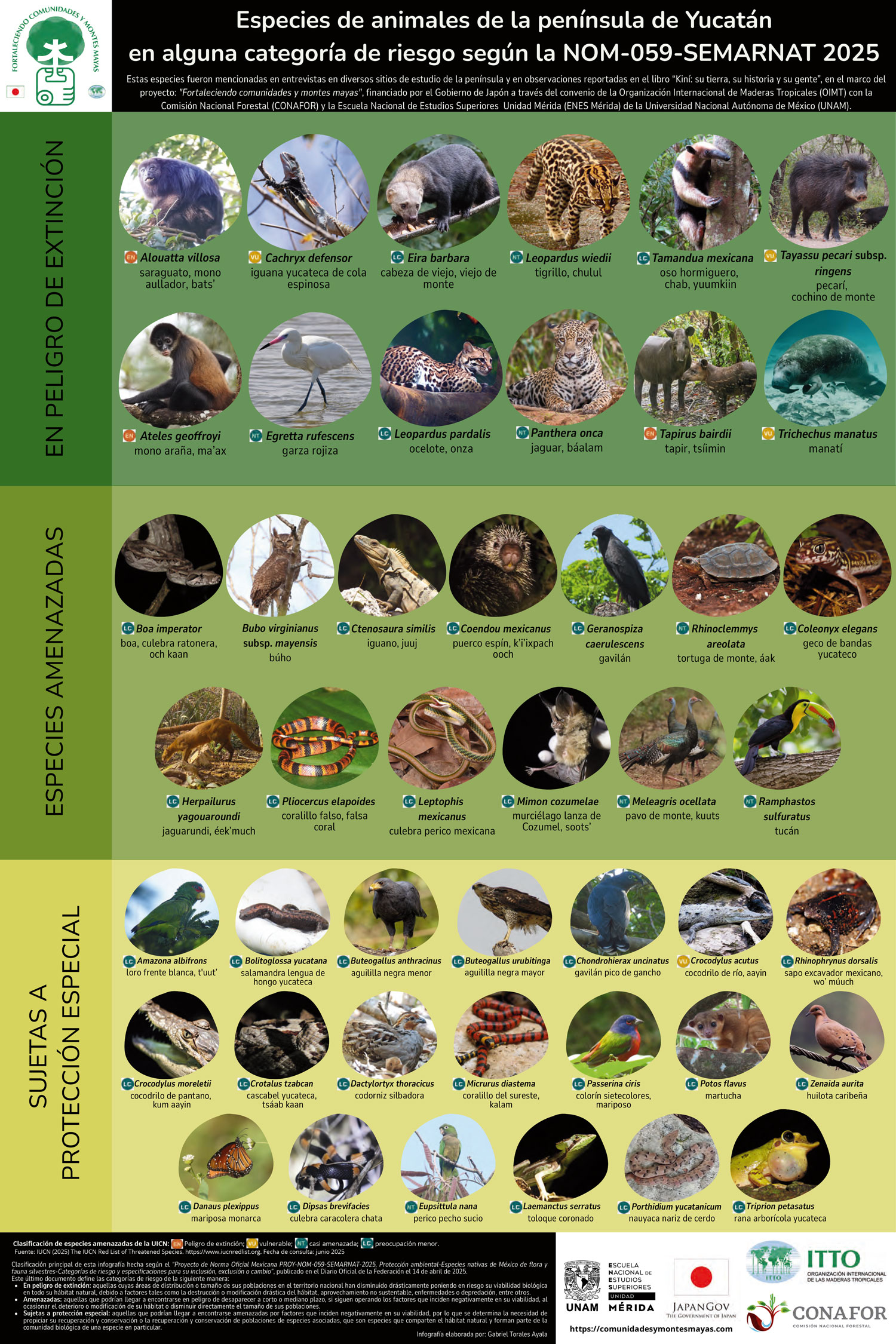
Animal species of the Yucatan Peninsula in some risk category according to NOM-059-SEMARNAT 2025. Infographic prepared by Gabriel Torales.

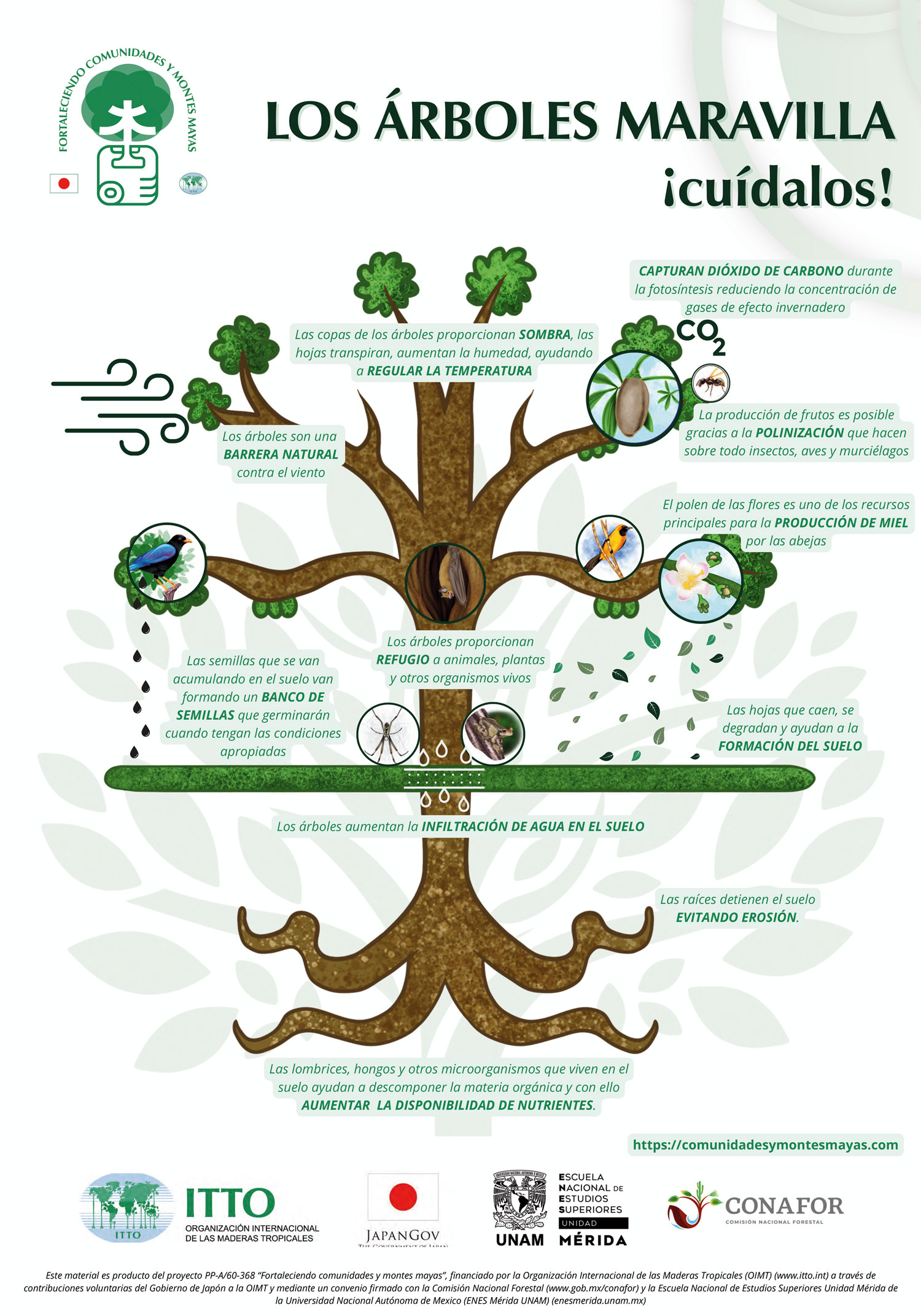
Information about the functions and benefits of trees. Infographic created by Bárbara Cortés and Adi Lazos. Illustrations by Miriam Pérez Ballesteros.

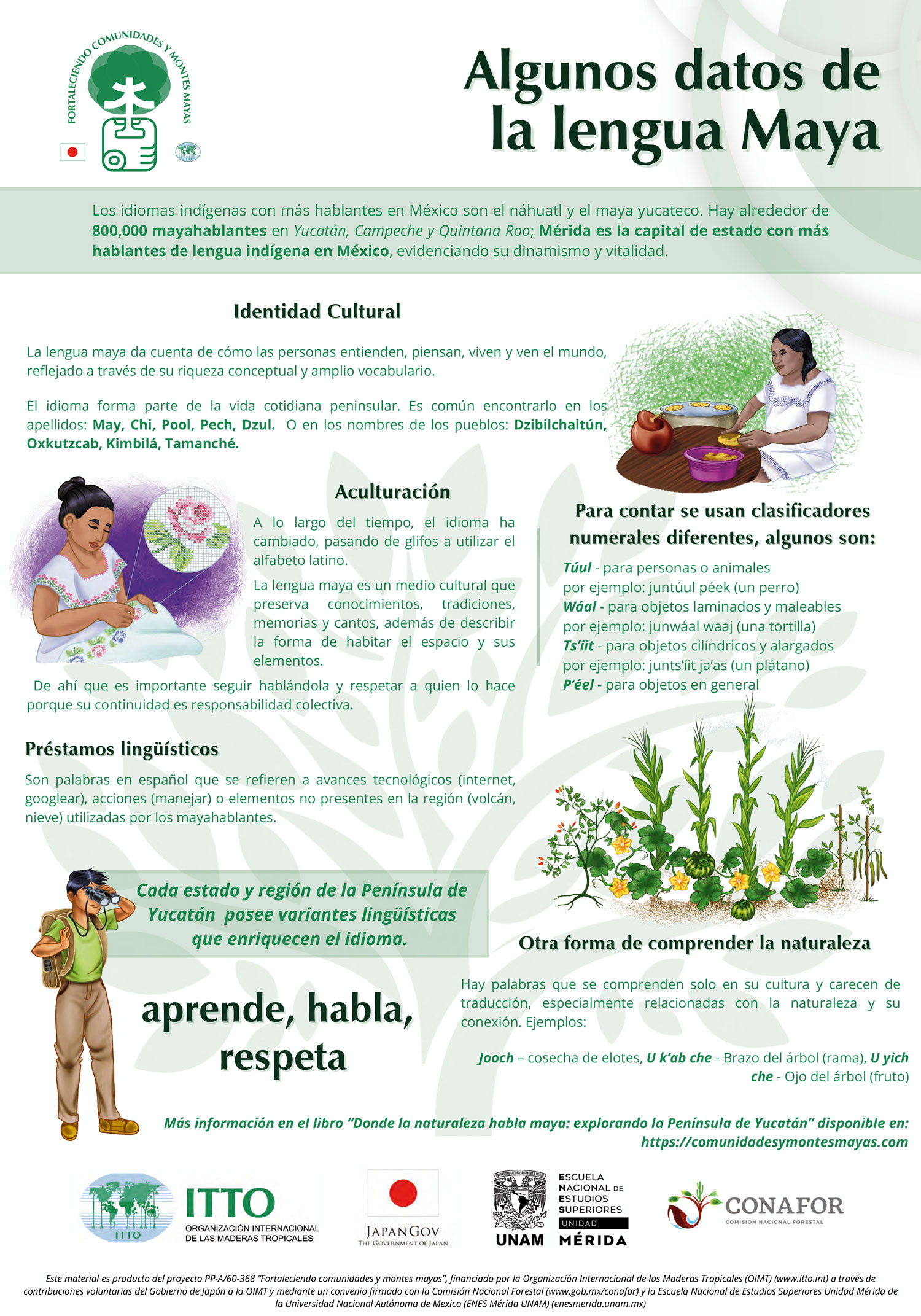
Some interesting facts about the Mayan language, with reference to the book «Where Nature Speaks Mayan: Exploring the Yucatán Peninsula.» Infographic created by Mayreb Rico, Bárbara Cortés, and Adi Lazos. Illustrations by Miriam Pérez Ballesteros.

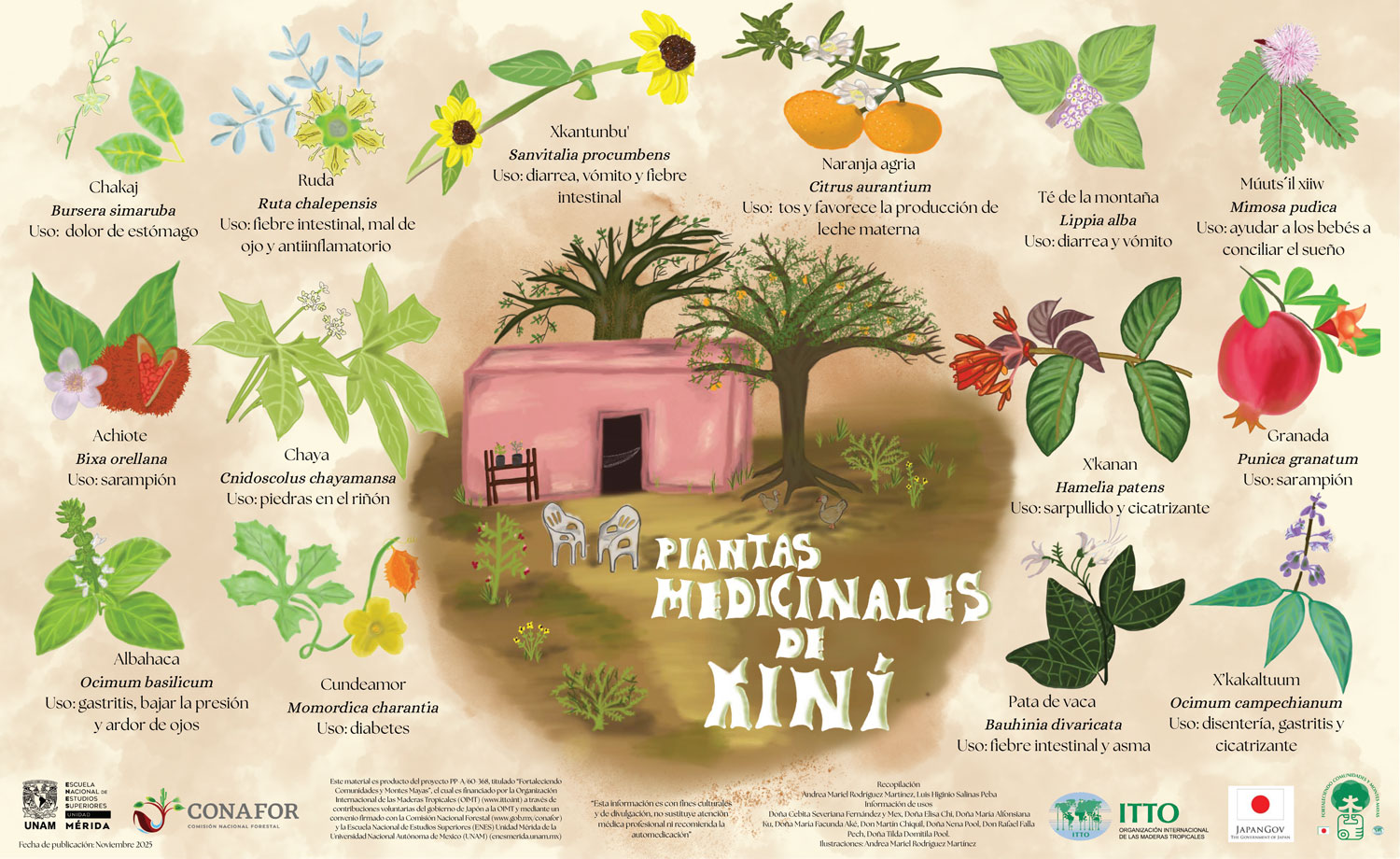
Medicinal plants of Kiní. Illustrated sampler.


Prepared by Mariel Rodríguez Martínez.

This outreach work seeks to rescue and share traditional knowledge about the use of plants with medicinal properties in the

Kiní community. Based on interviews with some of its inhabitants, the most commonly used species and their main applications were compiled. The work is presented in infographic format, which includes illustrations of the most frequently used medicinal plants, with the aim of enabling the entire community to recognize them, appreciate their importance, and preserve this knowledge as an essential part of Kiní's cultural identity.

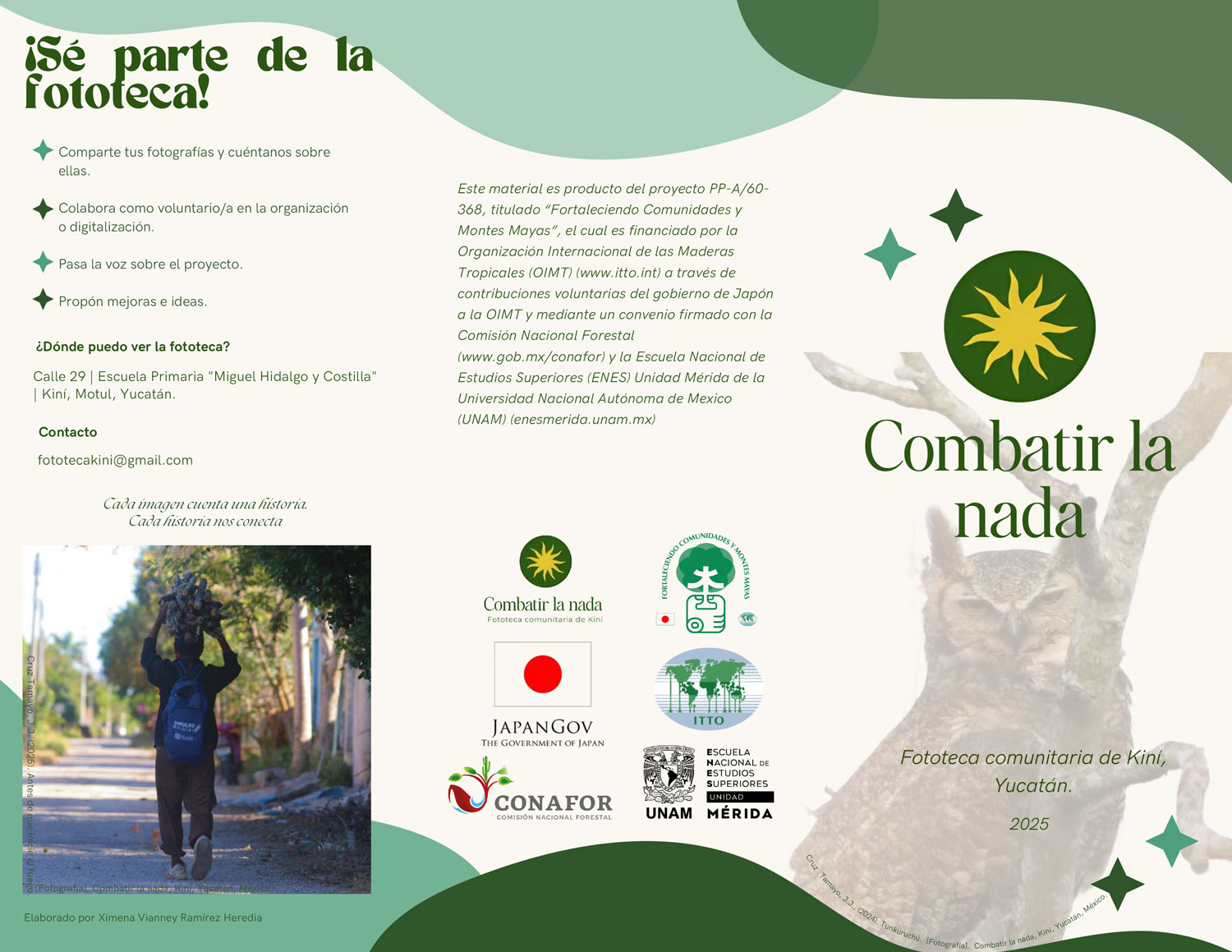
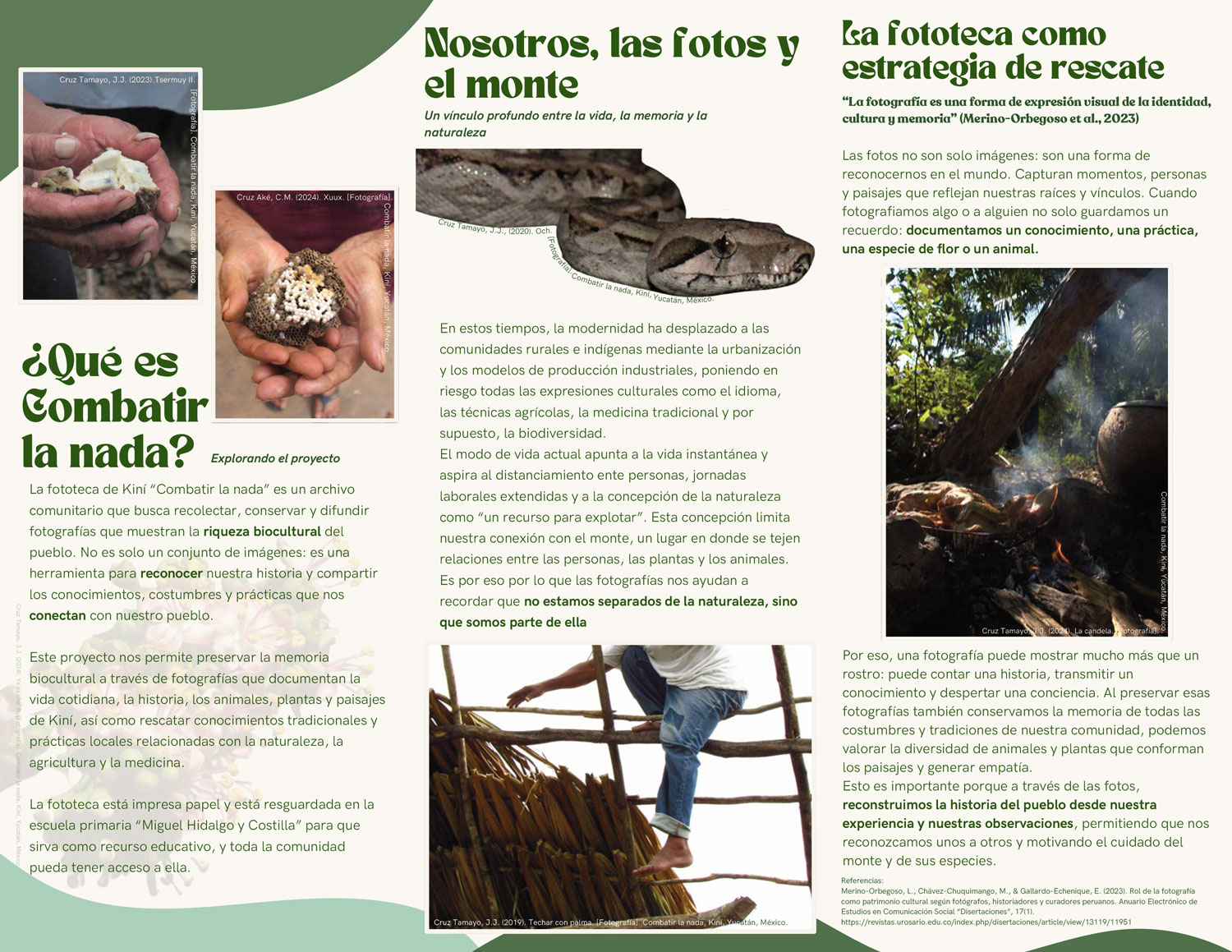
Photo library "Combating Nothingness" by Kiní. Brochure.

Prepared by Ximena Ramírez Heredia.

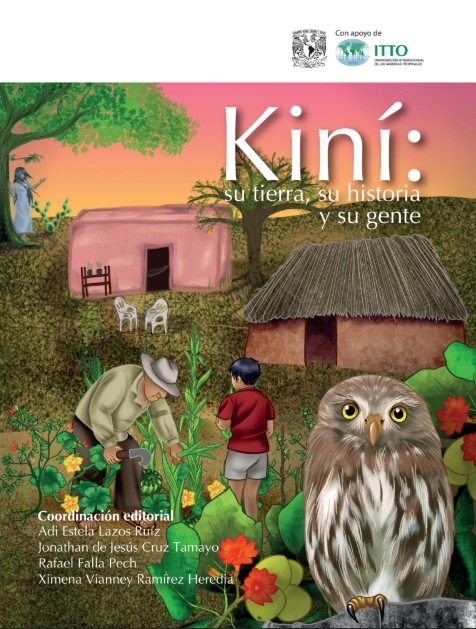
This brochure aims to invite participation in and promote the "Combatir la nada" (Combating Nothingness) Photo Library, especially for the residents of Kiní. The Photo Library seeks to document and showcase, as a historical photographic archive, the biocultural richness of this community and has been prepared in physical format. It is a local tool for disseminating the history, knowledge, customs, and practices related to the use and management of biodiversity.

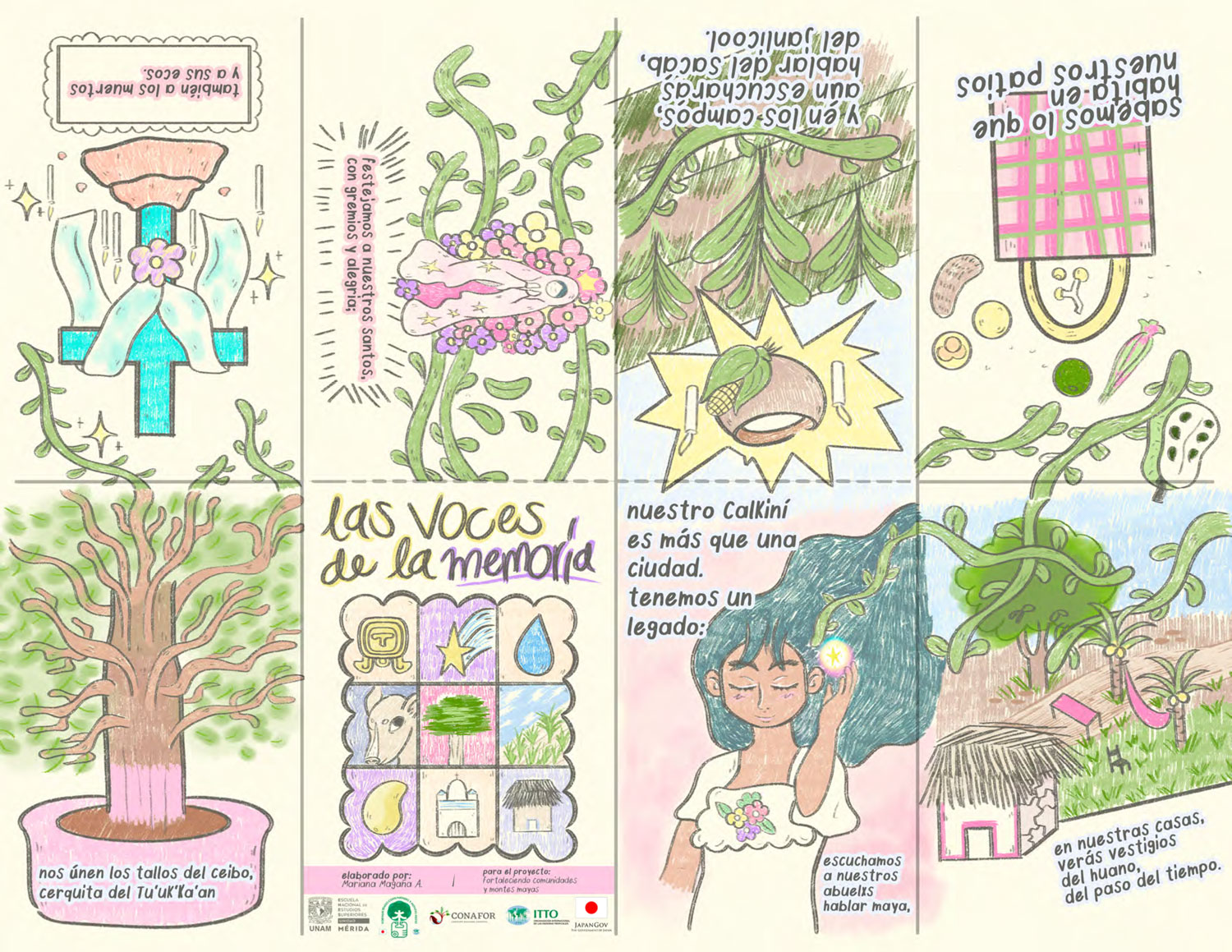
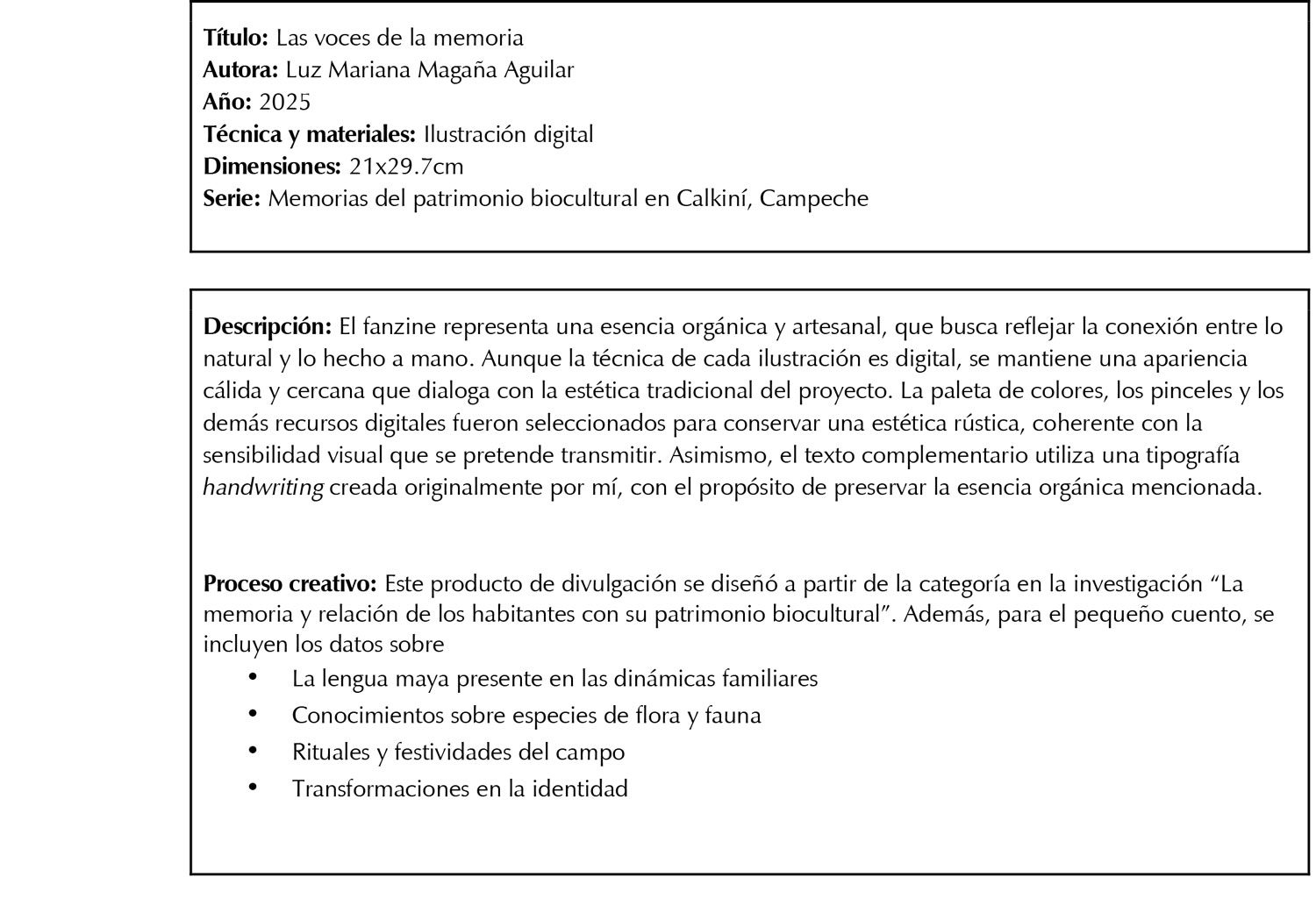
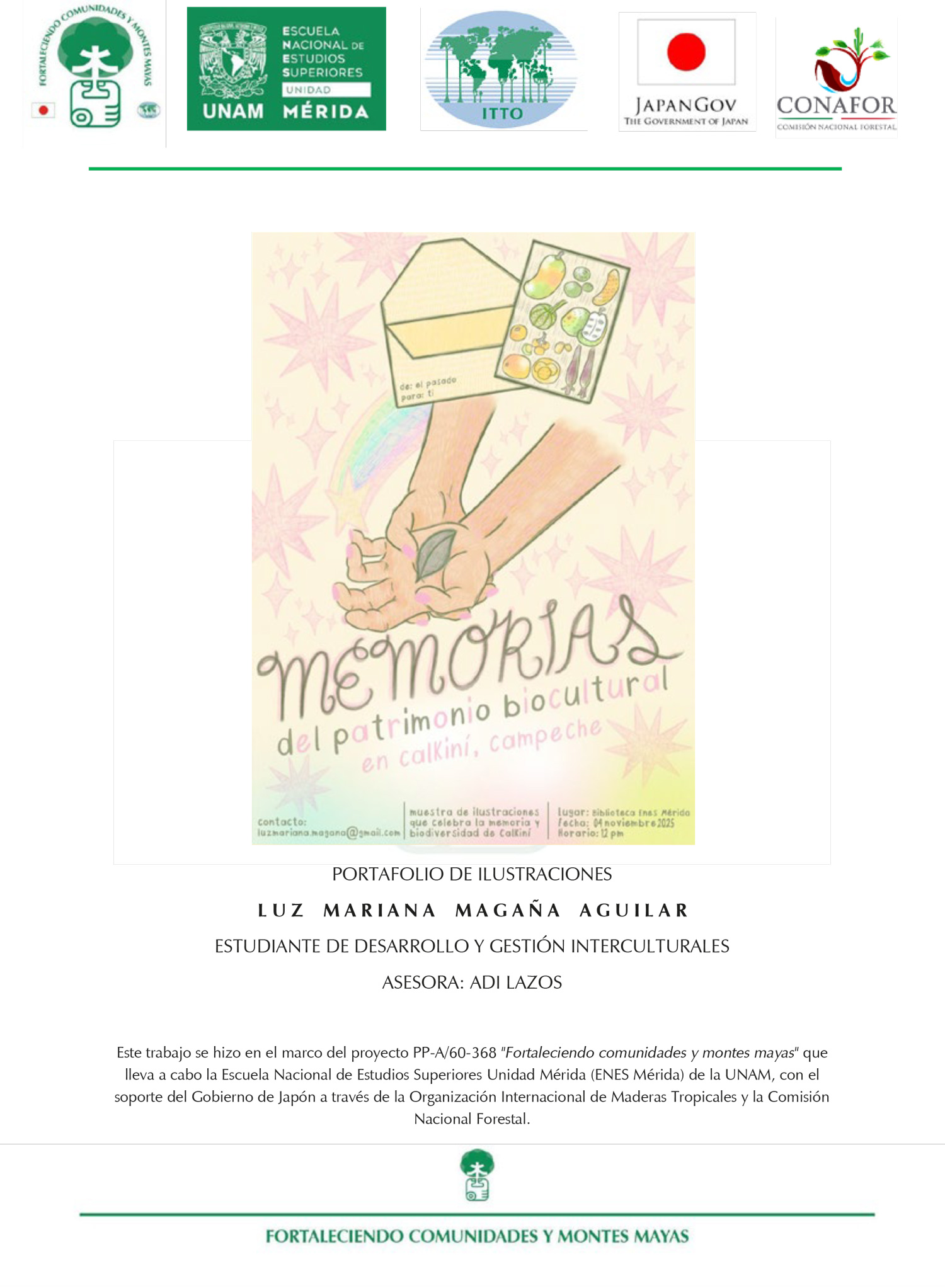
Biocultural heritage of Calkiní. Fanzine.

Prepared by Luz Mariana Magaña Aguilar. The fanzine was designed in A4 format (21x29.7cm) and, through simple folds, takes the form of a handcrafted mini-magazine. This type of publication helps to convey data and ideas in a creative and emotive way, going beyond a traditional report. It communicates the results of the fieldwork in Calkiní from a metaphorical and intercultural perspective, incorporating a short digitally illustrated story that gives voice to the community regarding its biocultural heritage. This work complements the Graphic Portfolio of the same title.

Biocultural heritage of Calkiní. Graphic portfolio.

Prepared by Luz Mariana Magaña Aguilar.

This portfolio of illustrations aimed to recognize and highlight the biocultural heritage of Calkiní, Campeche, by identifying its traditional knowledge and its relationship to the local biodiversity. The results of interviews with local residents are presented as illustrations and accompanying informational materials to promote the importance of the topics covered.

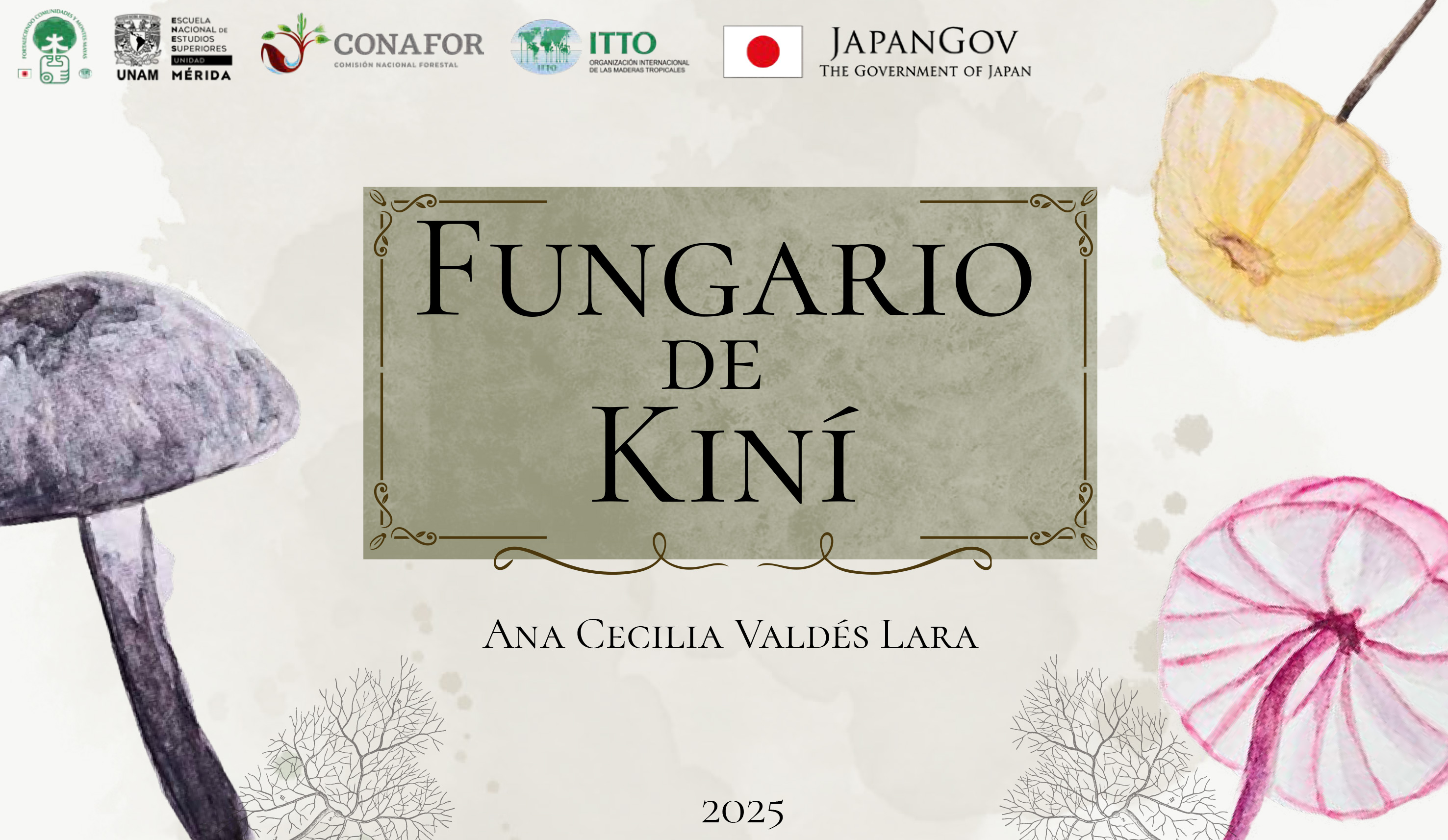
Kiní Funeral Home.

Prepared by Ana Cecilia Valdés Lara.

This portfolio of illustrations aimed to recognize and highlight the biocultural heritage of Calkiní, Campeche, by identifying its traditional knowledge and its relationship to the local biodiversity. The results of interviews with local residents are presented as illustrations and accompanying informational materials to promote the importance of the topics covered.

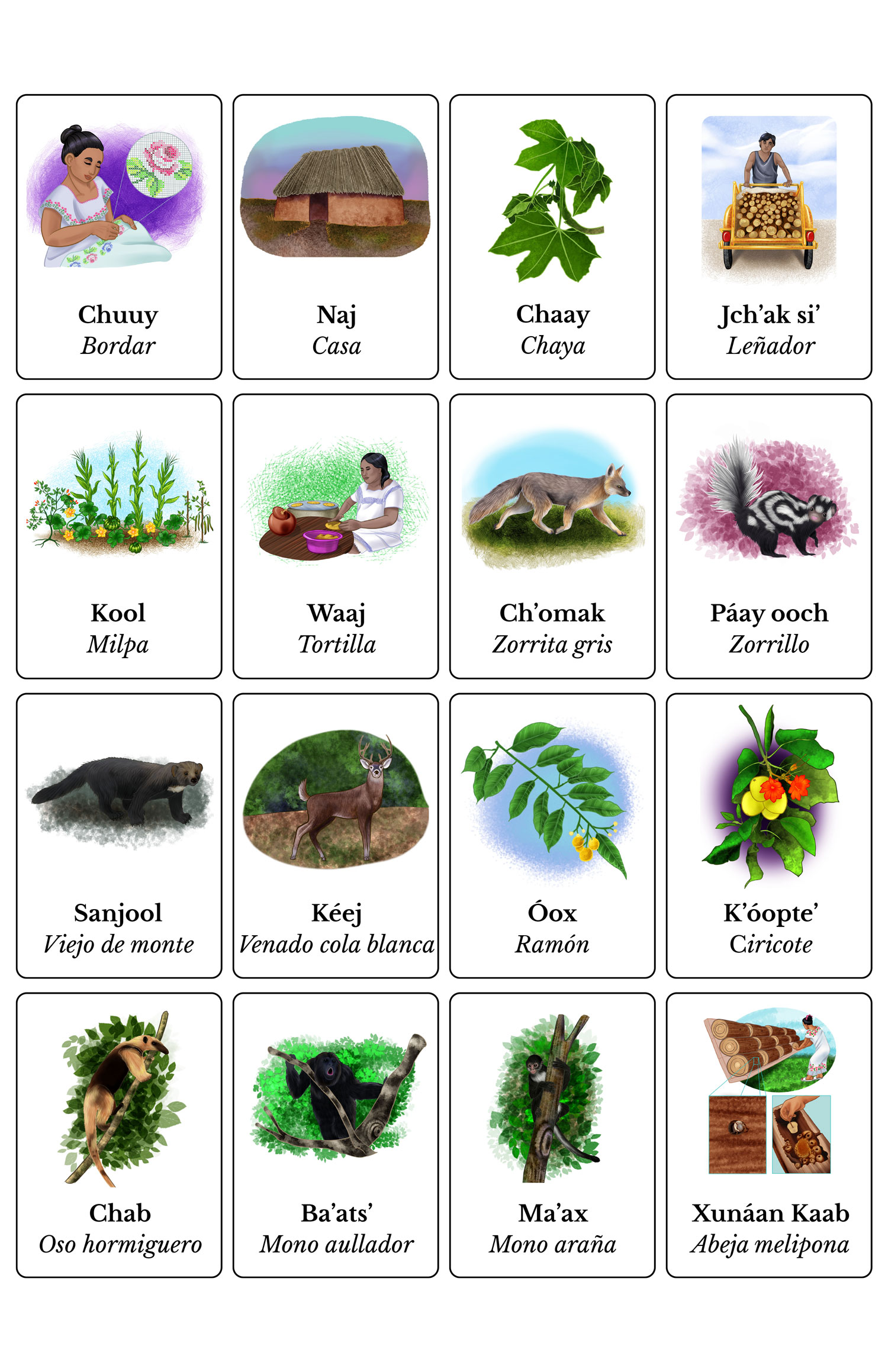
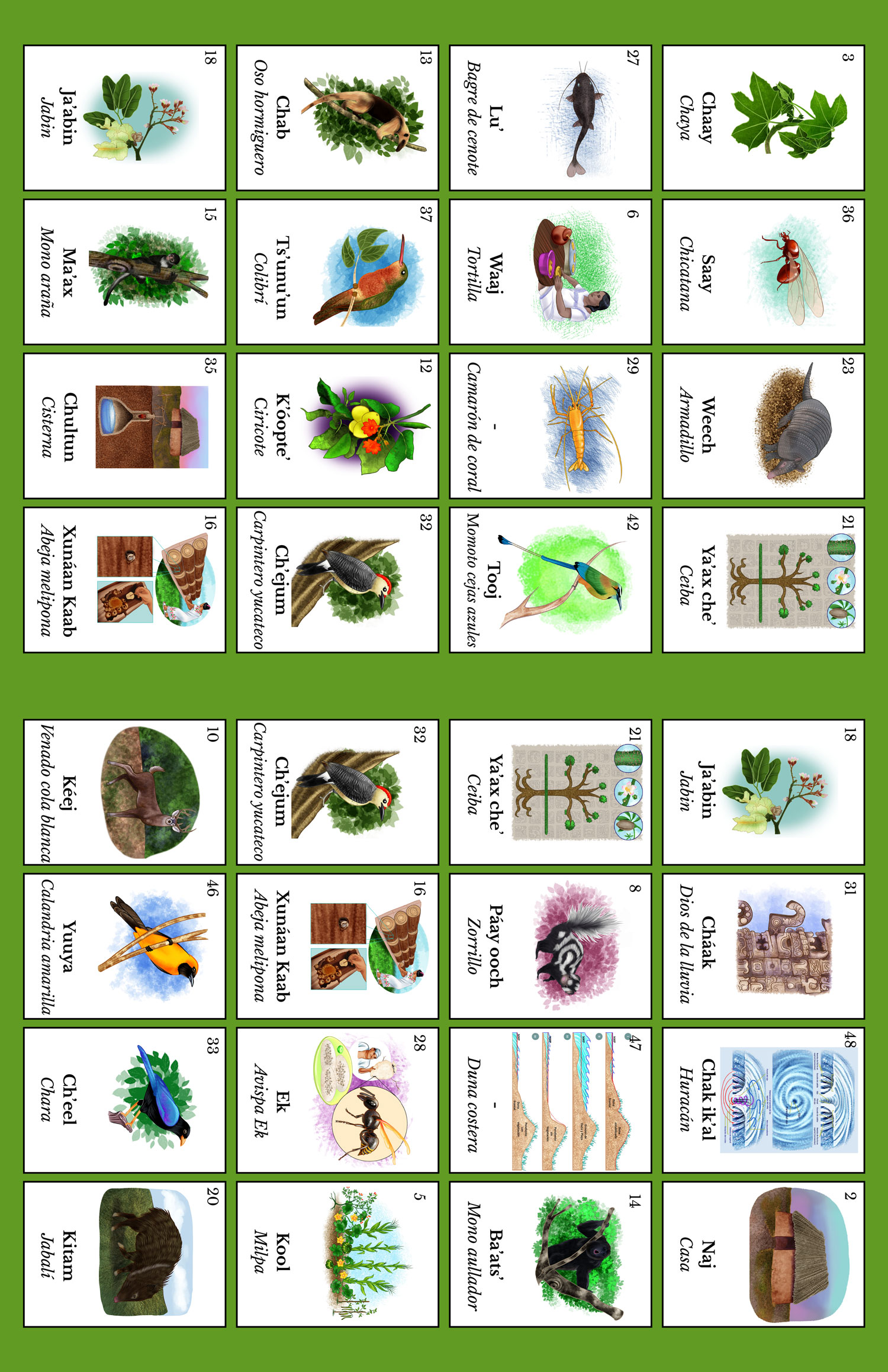
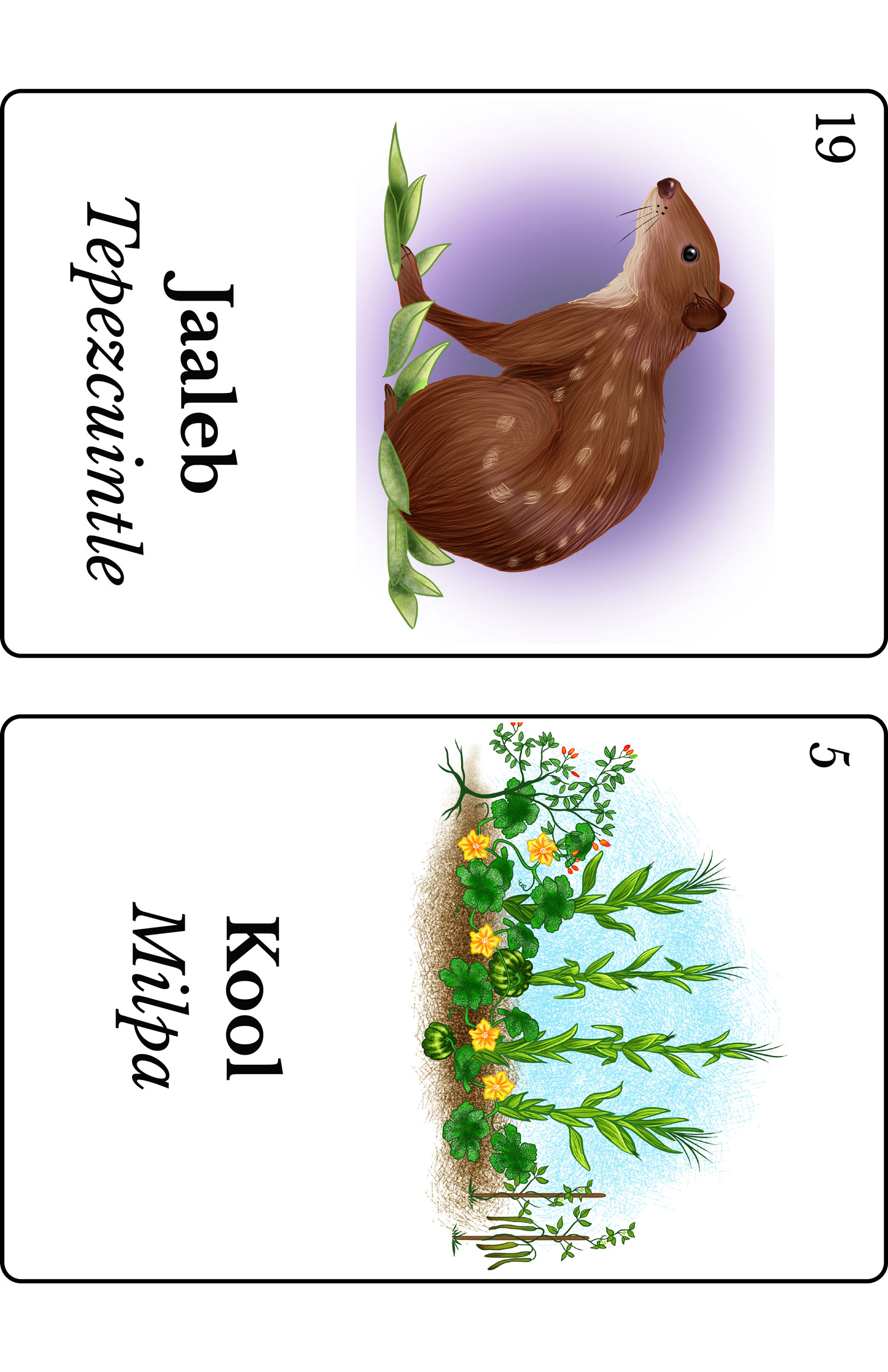
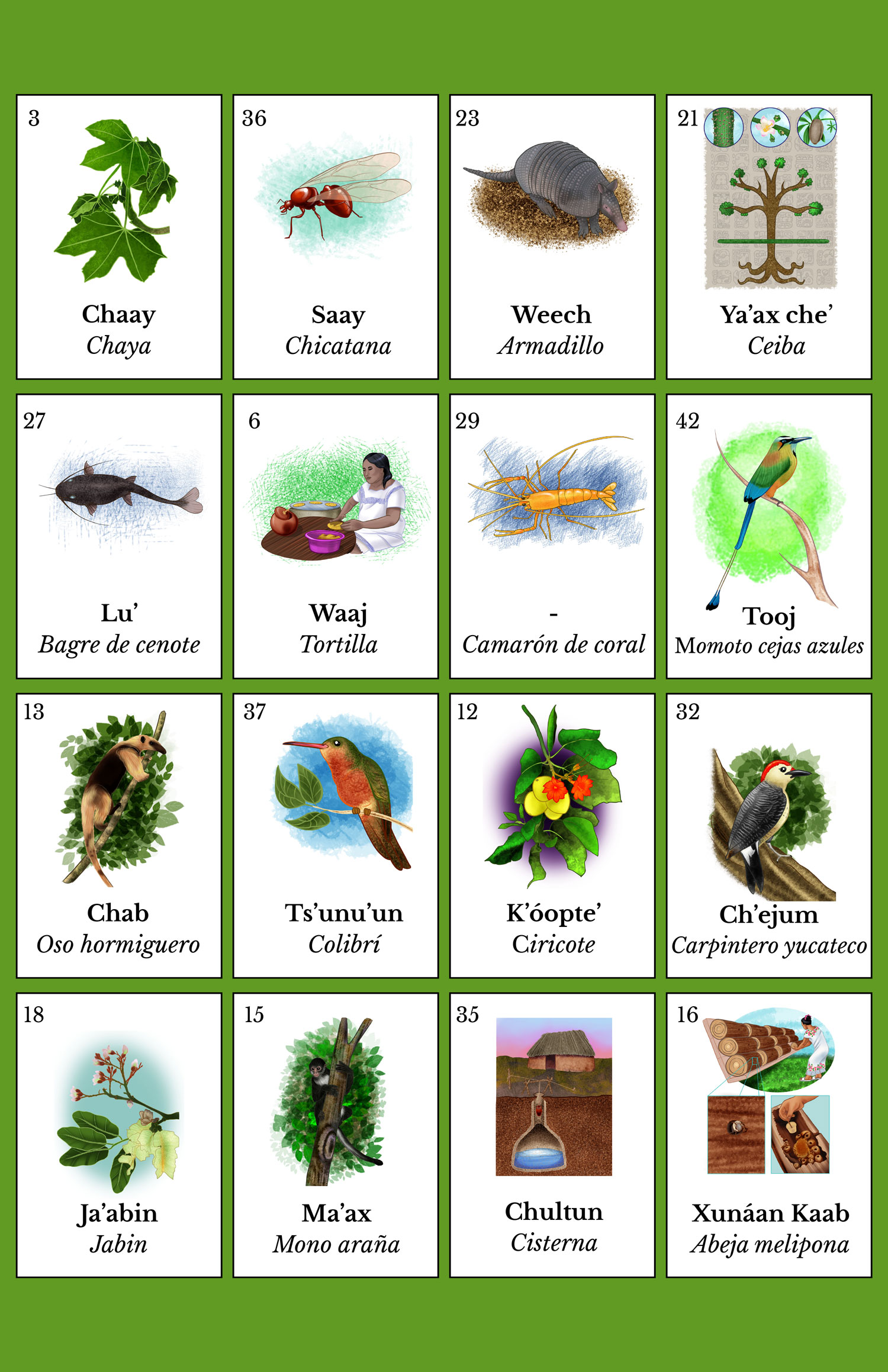
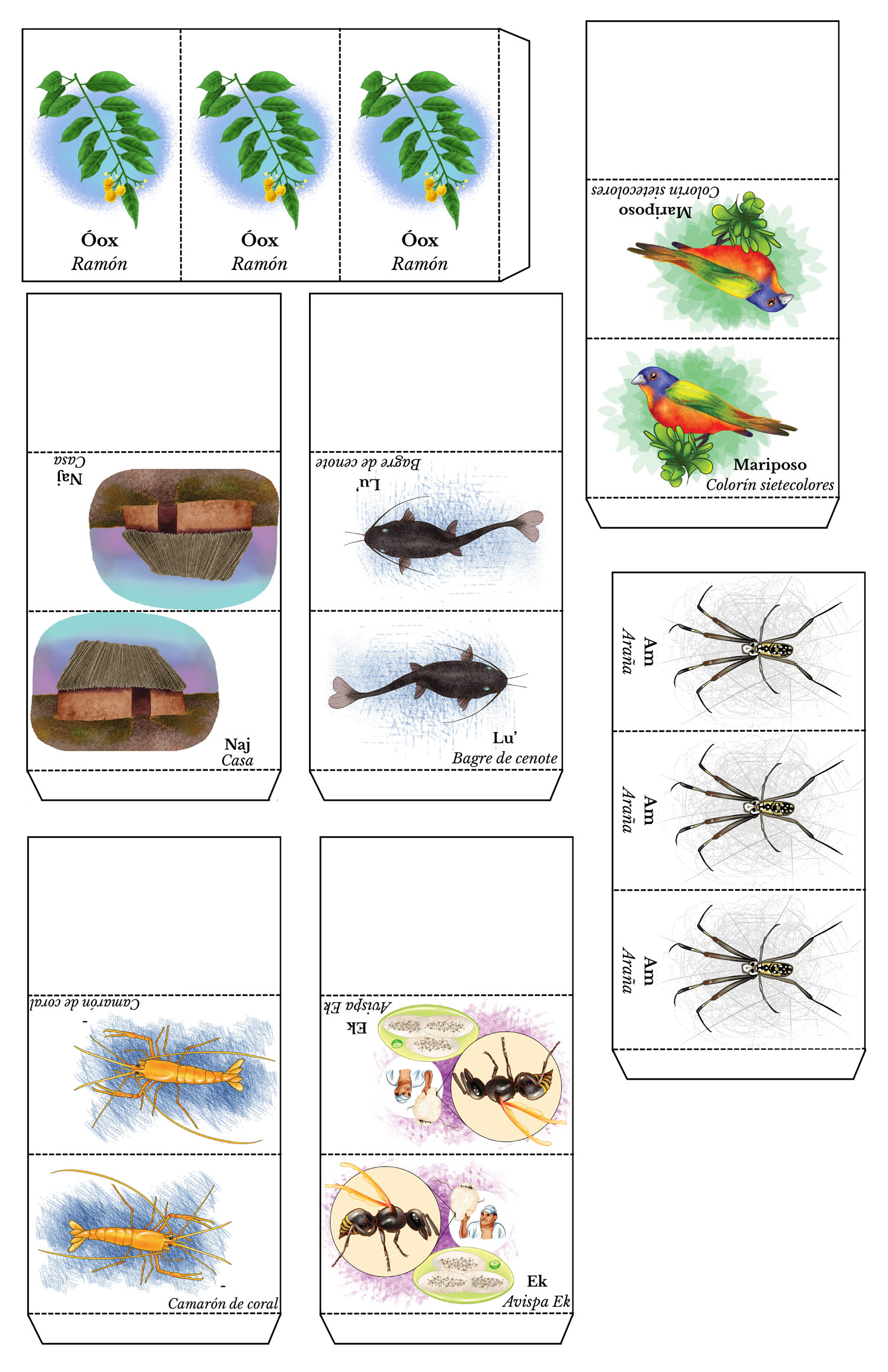
These materials can be downloaded, printed, and cut out. We recommend printing in color on tabloid or double letter size paper, using 300-gram cardstock, for best results.
Created by Mayreb Rico. Illustrations by Miriam Pérez Ballesteros.